
Welcome back for a new edition of Guru Gems. After putting out an article every Sunday for a year and a half (I have not missed a single one for 77 weeks straight!), today's post is a moment to look back, and also to look ahead.
On the menu for today:
📚 Guru Gems: The Best Of
💎 An honest look at the performance
👀 My watchlist from a different perspective (and why Visa stands out)
Let’s go!
📚 The Best of Guru Gems
There have been quite a few new subscribers over the past weeks/months (Thank you and Welcome! Guru Gems is closing in on 600 subscribers!), so I thought it would be good to share some of the ‘Best Of’ articles for anyone keen to learn from the best long-term investors.
3 most popular Guru deep-dives
1/ Norbert Lou - Why less is more, and how focus drives extraordinary returns. Also where the idea for the PayPal position started.

2/ Chris Hohn - On fortress businesses, and why S&P Global sits in two of the world’s most disciplined portfolios.

3/ Seth Klarman - On downside protection, patience, and the art of not blowing up

Physics for Investors
The ‘Physics for Investors’ series has also been quite popular. Here is the latest one, on value traps and why some cheap stocks stay cheap:

The quarterly Guru portfolio updates
And of course the posts at the core of Guru Gems, where I dig through the Gurus’ 13F filings to find the next Gem. Here is the most recent one:

And if you still want more…
The best way to find your way around all Guru Gems posts is the Archive, where everything is listed by category.

Before we continue: I would like to make Guru Gems even more useful for you, so I'd love to know which topics you would like to see more of. It only takes one click:
💎 An honest look at the performance
I started Guru Gems as a learning journey, trying to distill the frameworks and thinking process of the best long-term investors.
I have been putting my learnings to practice with two real-money portfolios.
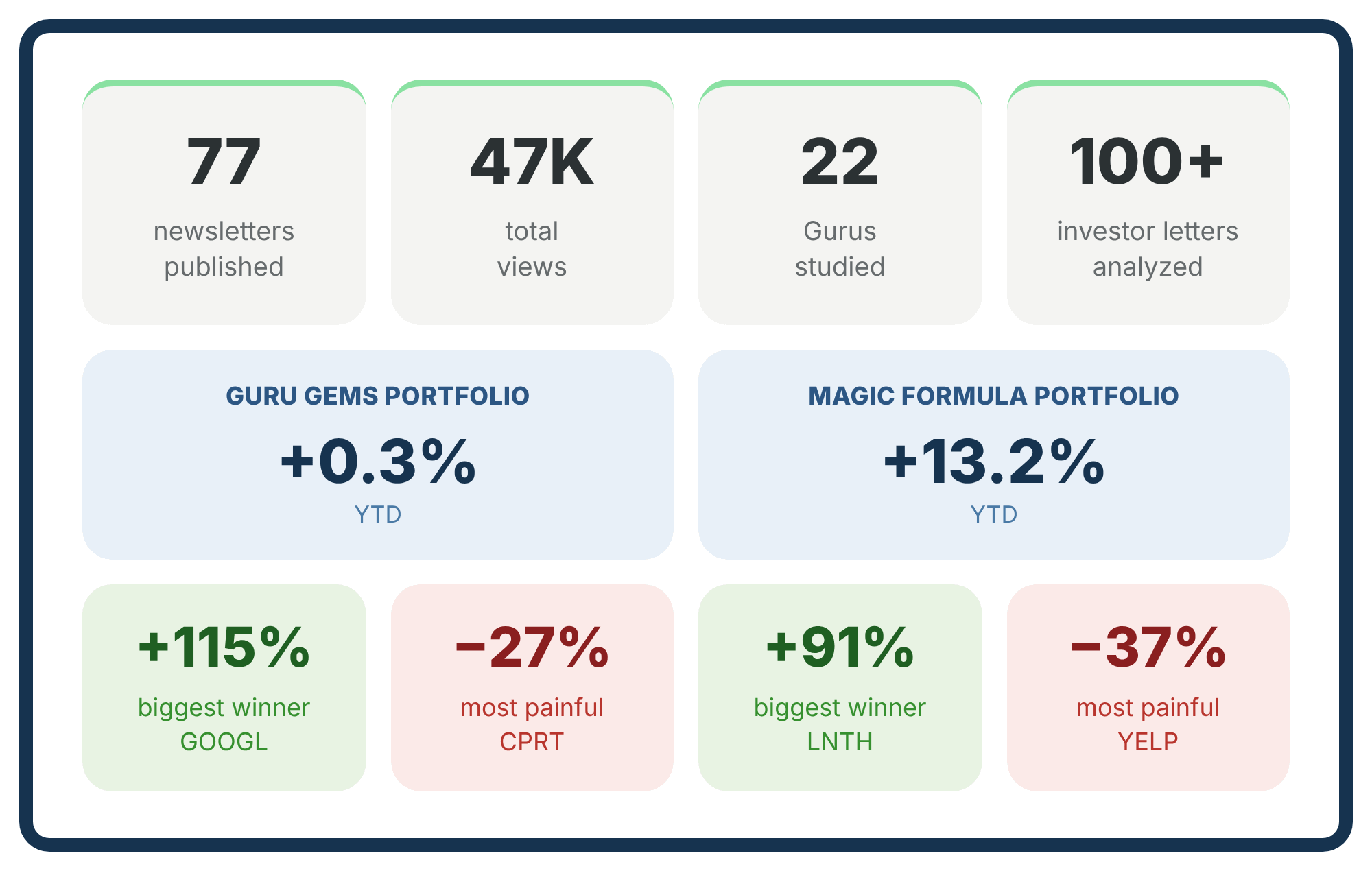
As you can tell from the dashboard below, the performance of the Guru Gems portfolio is quite underwhelming.
It is lagging the S&P 500 by a wide margin this year, despite holding a few names that had a very strong run (Google +115%!)
There were certainly mistakes along the way, and I wrote about the biggest ones in my 'Podium of Errors' post (the gold medal went to my position sizing on Constellation Software).
But when I go through the portfolio name by name, I am still convinced about the companies I own. Here is why:
1/ Quality has been out of favor for over a year
The Guru Gems portfolio tilts towards ‘quality‘ companies: high returns on capital, strong balance sheets and steady growth. Over the past year, that was not where the returns were. The market has been all about momentum, especially in AI and semiconductors.
J.P. Morgan Asset Management’s latest Factor Views (August) describes the quality factor as “continuing its worst stretch since the post-COVID-19 speculative bubble and one of the worst in history”, while momentum “extended its best multi-year run since the dot-com bubble”.
Terry Smith described in his half-year letter a market “dominated by momentum rather than any fundamental factors like profitability, returns on capital and growth” , and added that momentum is now “at a 30 year high and more extreme than in late 1999 just before the Dotcom bubble burst.”
Fundsmith trailed the MSCI World by 14 percentage points in the first half of the year, and Smith turned over more than half of the portfolio, writing that he will “take more account of momentum” going forward.
2/ My laggards are cheaper than they have been in years
According to the same J.P. Morgan report, the quality factor is now “one standard deviation inexpensive globally vs. history, and more inexpensive than that within U.S. markets.”
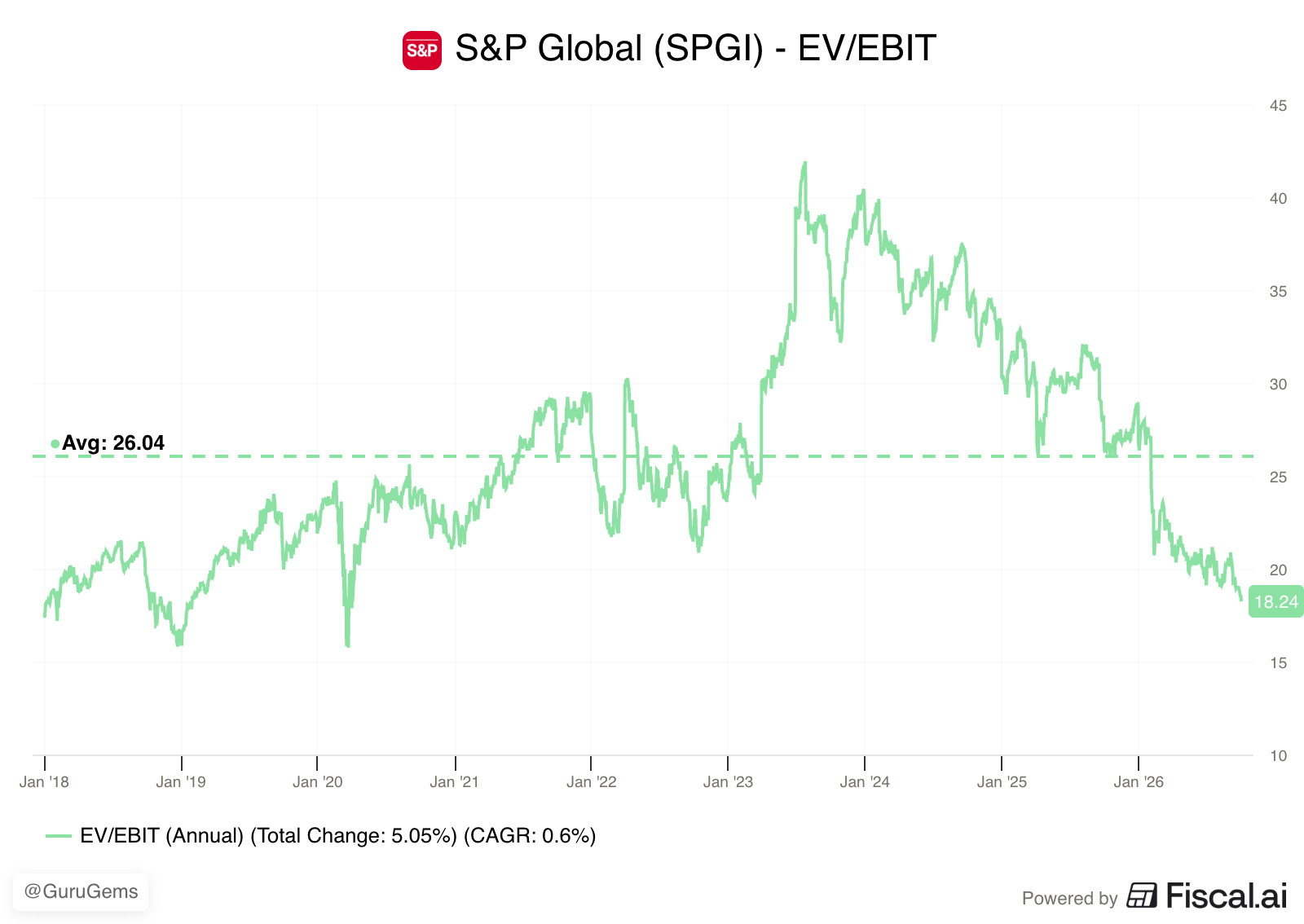
I see the same thing in my own portfolio. S&P Global for example trades at about 20x forward earnings, compared to roughly 27x at the end of last year and 30x at the end of 2024.
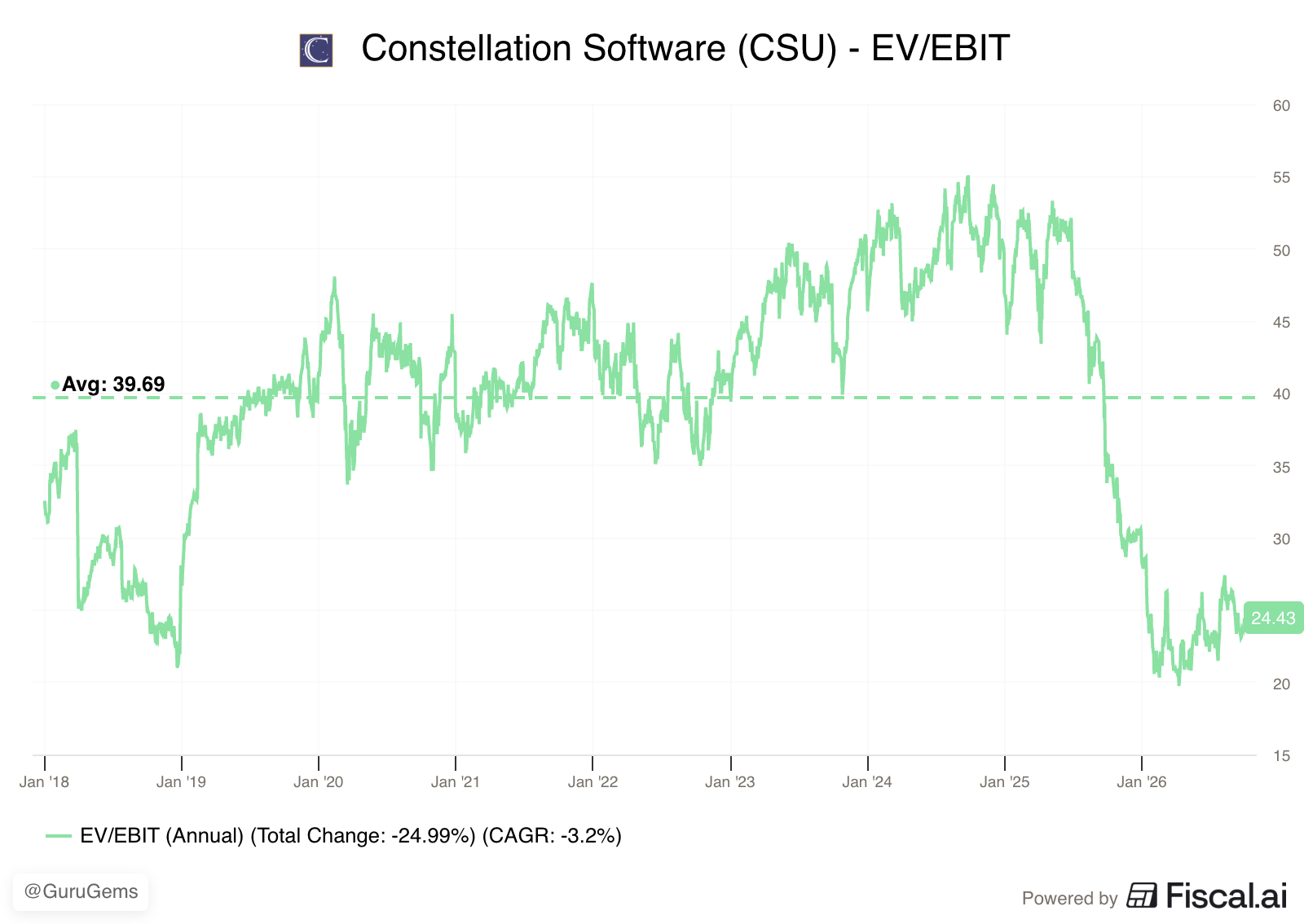
Constellation Software is still around 30% below its 52-week high, even though it kept compounding adjusted EPS and free cash flow per share at roughly 20%.
3/ Long-term Gurus see the same gap
David Poppe at Giverny Capital Asset Management, who used that Constellation Software example in his Q2 letter (which I covered in August), sums it up like this:
“We’re generating a good return, but I think our companies overall are performing better than their stock prices would indicate.”
Some Gurus are also putting money to work on that gap. In Q2, while the market was de-rating S&P Global, Bill Ackman, Chris Bloomstran, Triple Frond Partners and John Armitage all opened new positions in S&P Global, and Pat Dorsey added to his.
4/ Warning signs, and why I’m holding 25% cash
Michael Burry has been warning about excessive valuations in AI names for many months with what he calls a ‘cornucopia of risks’ piling up on top of it.
Earlier this week he wrote that he is “moving timelines up” and now thinks the AI bubble “may burst sooner than later”. He is not the only one: over the past months I have shared similar concerns from Seth Klarman, Paul Tudor Jones, David Rolfe at Wedgewood and David Poppe.
That is also why I’m still holding 25% cash. It obviously has not helped the performance in a rising market, but it will come in handy when opportunities present themselves.
“However, always remember, my shorting and put buying - it is not for everyone. For many, holding stocks that are already cheap and raising cash for future opportunities is well and good enough.”
— Michael Burry, 28 September 2026
And the Magic Formula portfolio?
On a more positive note, my Magic Formula portfolio is still ahead of the S&P 500 this year (+13.2% vs +12.8% as of last Friday). The margin is small, but it got there without a single semiconductor or AI infrastructure name, in a year where semiconductors have grown to about a quarter of the S&P 500.
→ If you enjoy this newsletter, please subscribe and like this post 🤍
→ If you find value here, consider buying me a virtual coffee ☕
👀 Buying 52-Week Highs: A Rule Breaker Look at My Watchlist
Earlier this week I was listening to the Behind the Balance Sheet podcast by Stephen Clapham (always great interviews!) where he interviewed David Gardner, co-founder of The Motley Fool and author of a very interesting book called ‘Rule Breaker Investing’, which I had also read a few months ago.
Here is the interview:
Buying the 52-week highs
One of the six traits of a Rule Breaker stock is ‘stellar past price appreciation’
“Most people hear those harmful 4 words ‘buy low, sell high’ and I’ve always said: buy high and try not to sell at all”
This may sound counterintuitive, but Gardner argues that stocks that win, usually keep on winning ("What do winners do? The answer is they win.").
“Let’s look at the 52 week highs in a world that’s often looking for the discarded cigar butts and the buy lows out there”
So in that spirit, I took the current Guru Gems watchlist and, instead of sorting it by the names that are down the most from their 52-week high, I looked at the ones that are closest to it.
Here are the 7 names on the watchlist that are within 10% of their 52-week high:

Why Visa stands out
Gardner makes it clear in his book that any one of the traits - including the stellar past price appreciation - does not stand on its own.
The key to Rule Breaker investing is to “look for the Rule Breaker traits together, working in concert”. And this is where Visa stands out.
How Visa scores on Gardner’s six Rule Breaker traits
Top dog and first mover in an important, emerging industry: Visa is the largest international payment network in the world and processes nearly twice as many transactions as Mastercard. Payments is not exactly an emerging industry, but digital payments only overtook cash globally a few years ago, and Visa is now building out stablecoin and agentic commerce offerings. Half a point.
Sustainable competitive advantage: the more consumers carry a Visa card, the more merchants need to accept it, and the more merchants accept it, the more consumers want one. I used Visa as the textbook example of a feedback loop in Physics for Investors #2. ✅
Stellar past price appreciation: the stock is up about 22% since its 52-week low of ~$294 this spring, and within 7% of its 52-week high. ✅
Good management and smart backing: Gardner prefers founder-led companies, which Visa is not. In his book, smart backing refers to the angel investors and venture capitalists who fund young companies. Visa is long past that stage, but the closest equivalent today would be the Gurus who have made it one of their largest positions, and there are quite a few of them (see Guru endorsements below). Half a point.
Strong consumer appeal: there is a good chance there is a Visa card in your (virtual) wallet right now. ✅
Grossly overvalued according to the financial media: Morningstar puts its fair value at $330, below this week’s close of $360, and rates the stock as overvalued. Gardner’s answer to that: “thank you very much”. ✅
Guru endorsements
François Rochon has owned Visa since 2010. In a WealthTrack interview last November, Rochon is asked to name the company in his portfolio that best represents “the best of the best”. His answer: “I would choose Visa.”
He bought it after the stock fell 25% on fears of new regulation on Visa’s fees, paying around 16 to 18 times earnings, and by his estimate earnings have grown by more than 15% a year since. When he bought it, he remembered a line from Warren Buffett in John Train’s The Money Masters:
“Warren Buffett said that the ideal business is the one that receives a royalty on the growth of others. And I thought Visa was a perfect example of that.”
Bill Ackman opened a position in Q2 (about 5% of Pershing Square’s portfolio). In his Q2 letter he wrote: “In our view, Visa and Mastercard are among the highest-quality businesses in the world.” He also addressed the biggest worry around the stock: “We believe stablecoins represent an opportunity for the card networks rather than a threat.”
Visa is the largest position for John Armitage (14%) and ValueAct (14%), and the second-largest for Chris Hohn (20%), as I covered in my Q2 13F update.
Not everyone is buying though: Terry Smith cut his long-standing Visa position in Q2 to help fund a new position in Mastercard.
Valuation
On an EV/EBIT basis, Visa trades at about 25x, slightly below its average of 26.4x since 2018, and well below the 35x+ it reached in 2021.
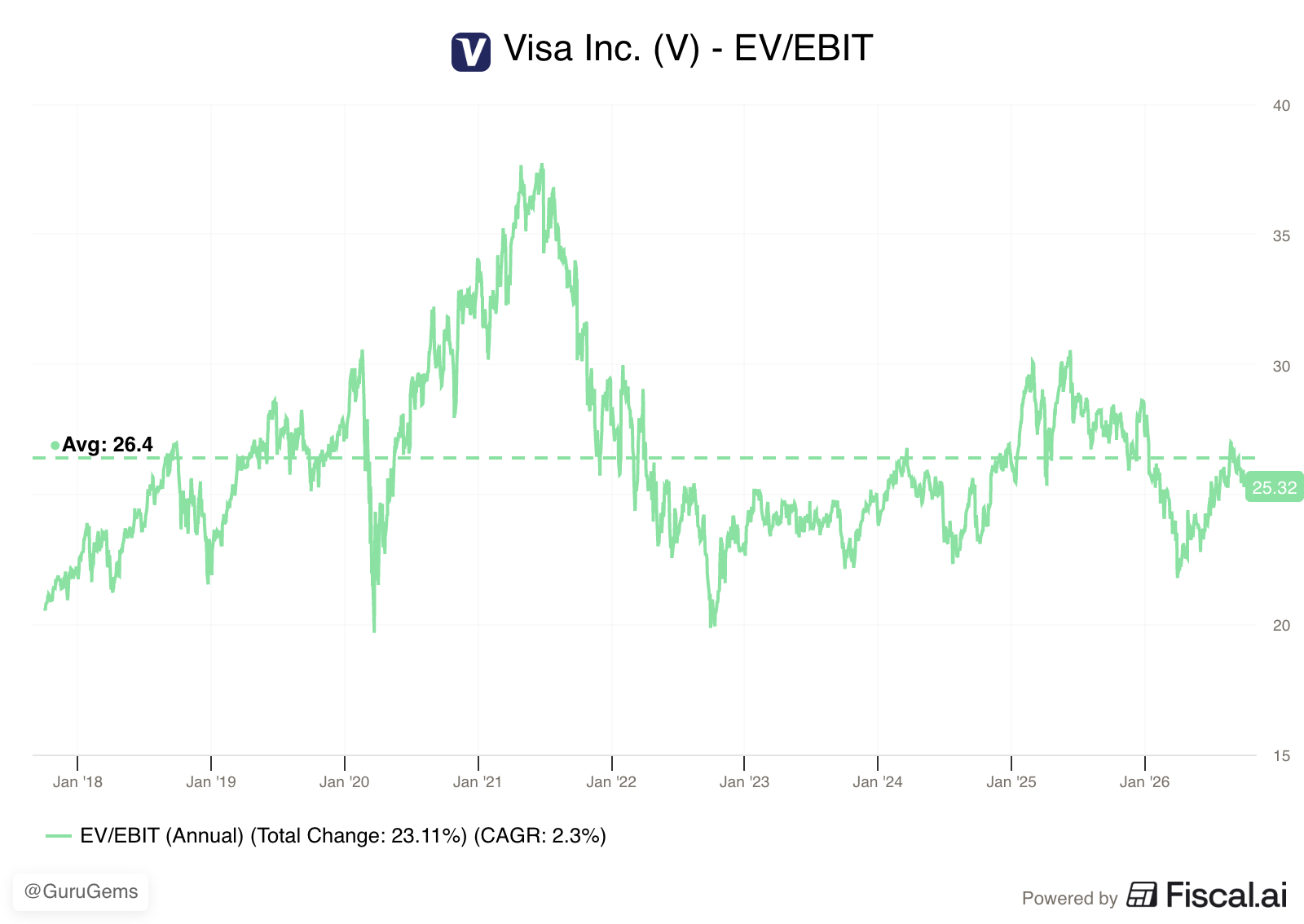
In hindsight, the moment to buy was late March and early April, when the stock dropped to its 52-week low and the EV/EBIT multiple fell to around 22x. Ackman’s letter mentions exactly that de-rating (to “22 times next twelve months’ earnings”), and his 13F shows he opened the position during the second quarter.
I realize it's a bit ironic to be looking for a cheaper entry point in a section about buying 52-week highs :)
Key risks
Regulation and litigation: Visa took $2.6 billion in litigation provisions in fiscal 2025, and Europe is pushing ahead with a digital euro, partly to reduce its reliance on Visa and Mastercard (together 61% of card payments in the eurozone).
New payment rails: stablecoins and agentic commerce could route payments around the card networks. But as Ackman and others point out, the opposite may happen as Visa is positioning its network to handle the future of money movement.
📌 I’m starting a small position in Visa
Visa scores 5 out of 6 on Gardner’s traits, has some of the best Gurus behind it, and trades slightly below its long-term average valuation. I’m starting a small position in the Guru Gems portfolio, at around 2%.
At 25x EV/EBIT it is fairly priced rather than cheap, and the gold medal on my own Podium of Errors went to position sizing on Constellation Software. So I’m starting small, which leaves room (and cash) to add if the market gives me another chance like the one in late March and early April.
That’s it for this week’s edition. As always, thank you for following along my learning journey!