

Welcome back!
If you’re new to Guru Gems: I study the world’s best long-term investors and share what I learn, then apply it to two real-money portfolios. (Learn more here)
On the menu today:
📝 Seth Klarman update: his biggest Q2 buy
💎 Guru Gems Portfolio update: the winning and the losing side
👀 Watchlist update: three names I’m watching
Here is the 2-minute AI audio version:
🕵️ Seth Klarman’s special situation stock
Three weeks ago I wrote a post on Seth Klarman, the legendary value investor who runs Baupost and the author of ‘Margin of Safety’.
The post came just before the release of investors’ Q2 portfolios, so I highlighted a few names from Klarman’s Q1 portfolio, without going into too much detail.
Now that we have the latest 13F (US equity positions on 30 June 2026), I updated the post with the latest Q2 data, some additional commentary, and a closer look at Klarman’s biggest buy during Q2: Genuine Parts Company (GPC).
I analyzed why Klarman may have bought this company and whether I should consider adding it to my Guru Gems portfolio.
Here is the updated post:
Seth Klarman & The Baupost Way

“The only way to invest well long-term is to be differentiated from the crowd”
→ If you enjoy this newsletter, please subscribe and like this post 🤍
→ If you find value here, consider buying me a virtual coffee ☕
💎 Guru Gems portfolio update
The Guru Gems portfolio currently holds 14 positions and 22% cash. As of 30 August the portfolio is up 4.7% year to date and 9.3% over the past twelve months, against 12.4% and 19.4% for the S&P 500.
Three of my larger positions spent most of 2026 in a drawdown, and sitting on 22% cash in a rising market has not helped either.
For now, my Magic Formula portfolio (23% YTD, 25% 1Y) is the clear winner of my 2 portfolios.
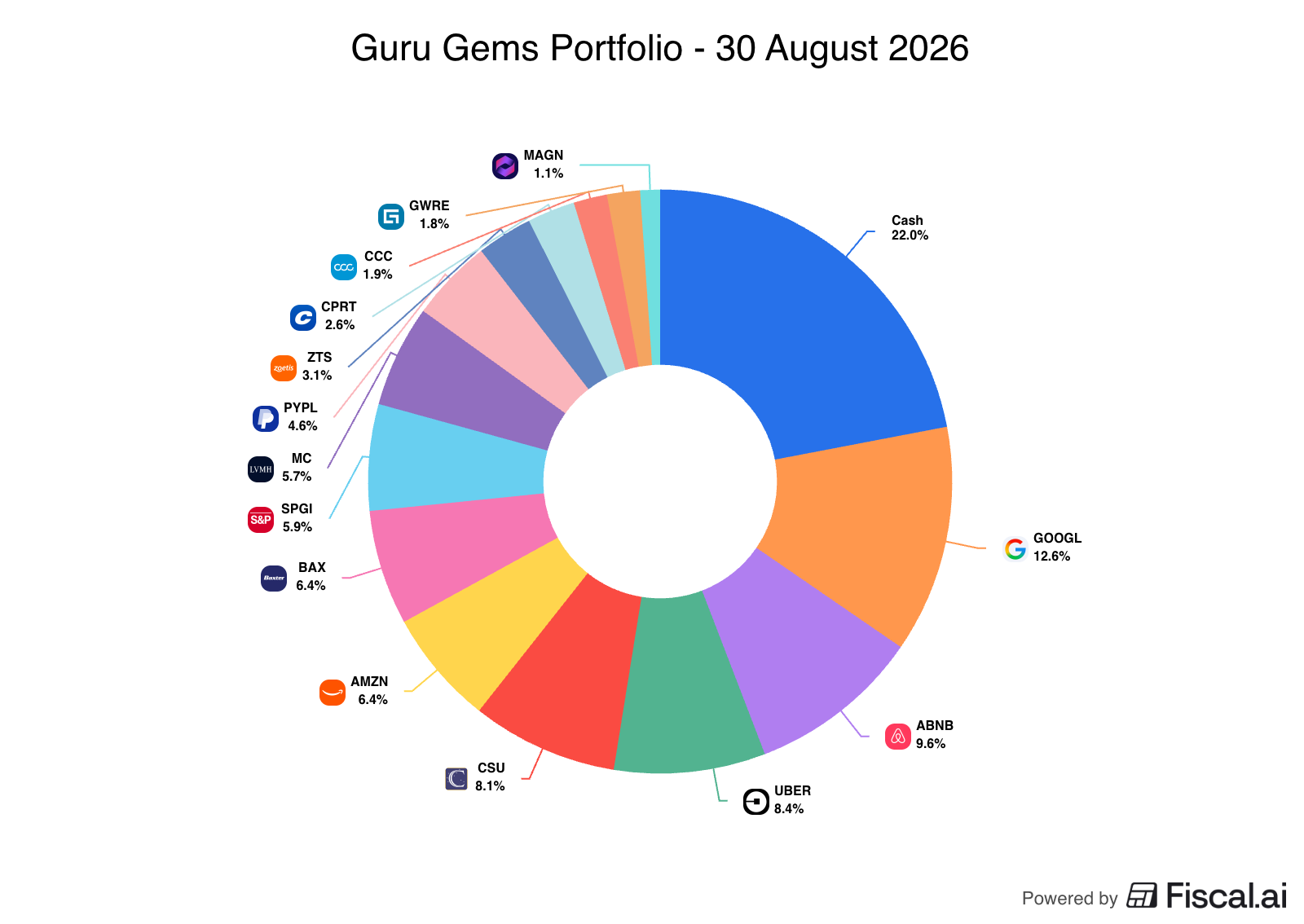
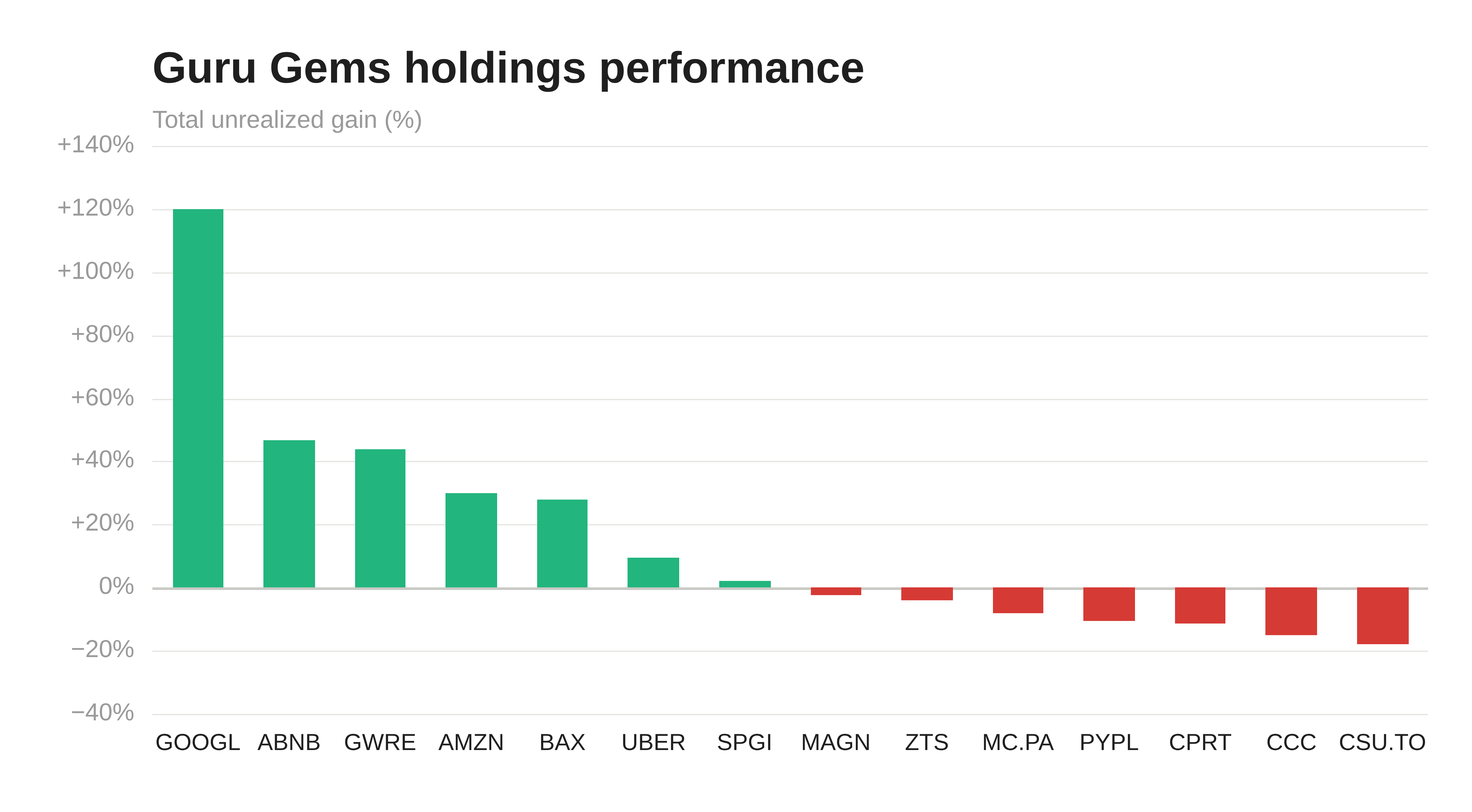
Rather than walk through every holding, I want to focus on a few names where something changed this month.
Updates from the ‘winning’ side
Airbnb (ABNB)
Airbnb touched a new 52-week high of $193 earlier this week.
I started the position in June 2025 at $134, added in August ($123) and October ($125), for an average cost of $129. That is a gain of nearly 47% in a bit over a year.
The big move came after Q2 results on 6th August: revenue up 17% to $3.6 billion, nights and seats booked up 10%, adjusted EBITDA up 21%, and full-year guidance raised to at least mid-teens revenue growth. The shares jumped 17%.
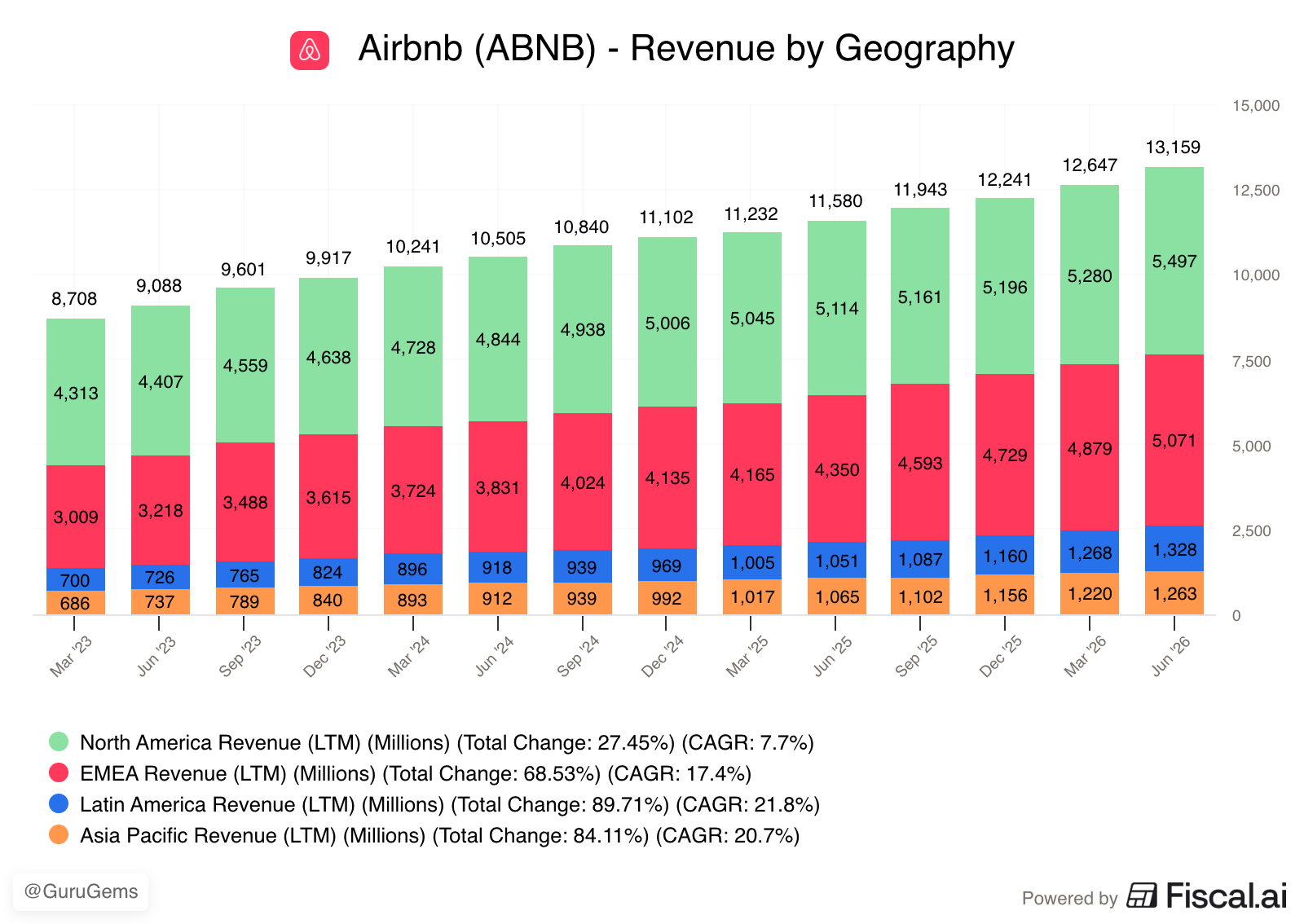
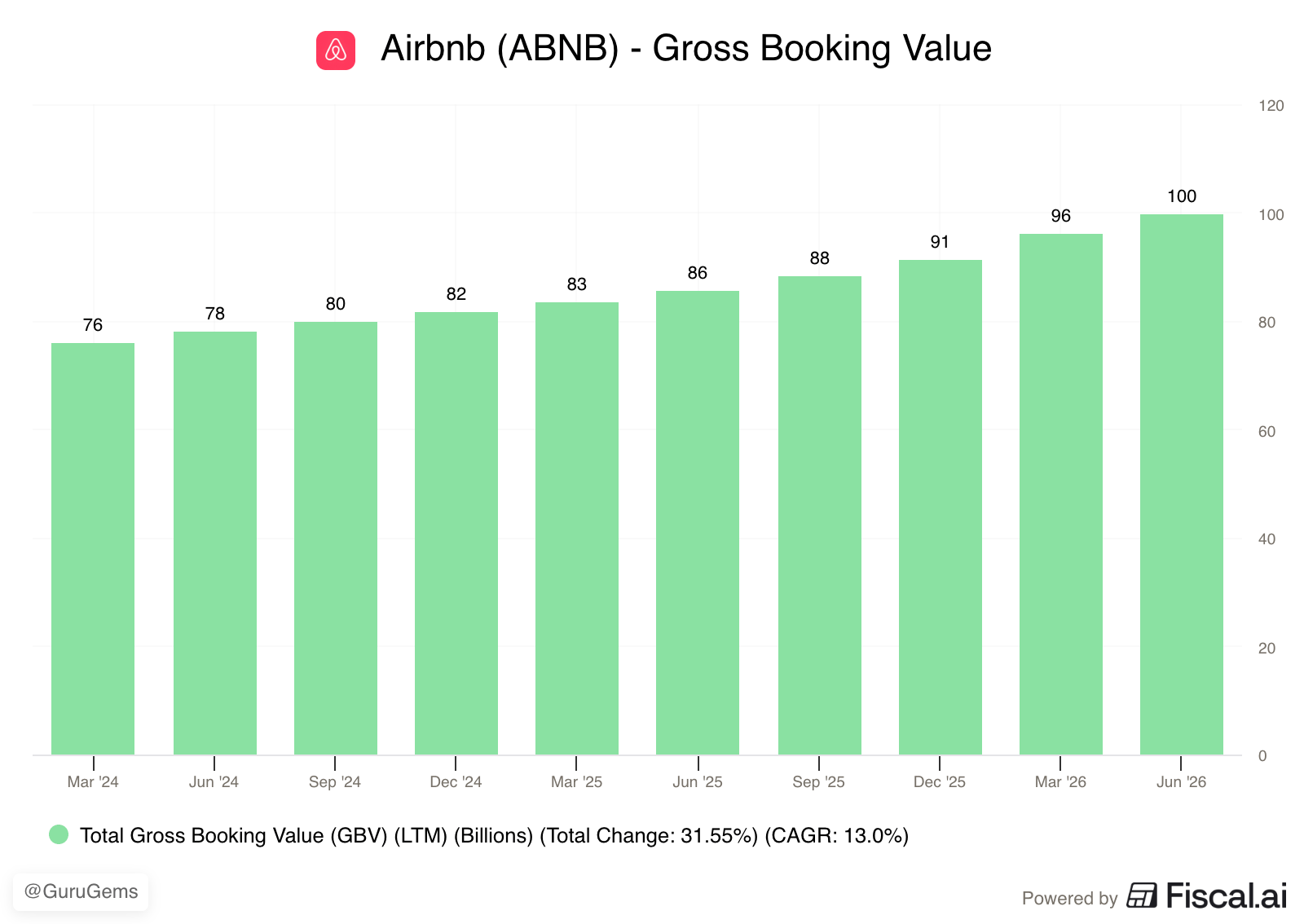
Airbnb is currently trading at 43 times trailing earnings, which looks very expensive.
But as Bill Nygren argued when I covered him last year, that number overstates the case, because GAAP accounting pushes Airbnb’s long-term investment spending straight through the income statement. On a free cash flow basis it looks rather different. Trailing free cash flow of $4.8 billion puts the stock nearer to 23 times, which already looks more reasonable.

With the stock up almost 50% vs my average purchase price and the position getting close to 10% of the portfolio, I’m considering trimming if it keeps going up in the next weeks or months.
To close on Airbnb, I wanted to share a piece I came across which I really enjoyed.
Chris Von Hoene (New Horizons Investment) writes a series of case studies where he analyzes companies through the Nick Sleep / Nomad Investment Partnership lens.
Airbnb was the first company in the series - check it out!

Guidewire Software (GWRE)
I added Guidewire as a 1-2% starter position in early July, after studying it following Bryan Lawrence’s portfolio review. It was one of the many software names dumped by investors on fears that AI would come and replace it all.
Lawrence had clearly done his homework and added for 3 consecutive quarters to his position.
The stock is now up 100% (!) from its June low and my position is up 44% since I bought it.
Unfortunately, at a 1-2% weight, a 40+% move doesn’t do much at the portfolio level.
This is the Greg Padilla lesson from Stock Master Maestros but in reverse: standard-sized starter positions protect you when you are wrong, but they also cap you when you are right.
Lawrence increased his own position by another 10% in Q2, on top of the 73% increase in Q1.

Updates from the ‘losing’ side
A few names have hurt this year. Most have started to recover a bit and my thesis for owning them hasn’t really changed.
Copart (CPRT)

Copart’s drawdown reached close to 60% at the July trough, the largest drawdown in more than 20 years, for a debt-free business with $4.2 billion of net cash.
The main cause is US insurance unit volumes falling 4.2% in the fiscal third quarter, as higher premiums pushed consumers toward liability-only policies and higher deductibles. Fewer claims → fewer totaled cars.
But I don’t believe the moat is broken:
Total loss frequency reached 23.6%, nearly five points higher than four years ago. Repair costs keep climbing on sensor-laden cars, and strong auction returns make the total loss decision easier for carriers.
Pricing power is intact. Even with volumes falling, average selling prices kept rising (mid-single digits globally, high-single digits for US insurance auctions). A broken business doesn’t get to raise prices into declining volumes.
The balance sheet is a fortress. Roughly $4.2 billion in cash against essentially no debt, with ROIC around 29%. Morningstar still rates the moat Wide.
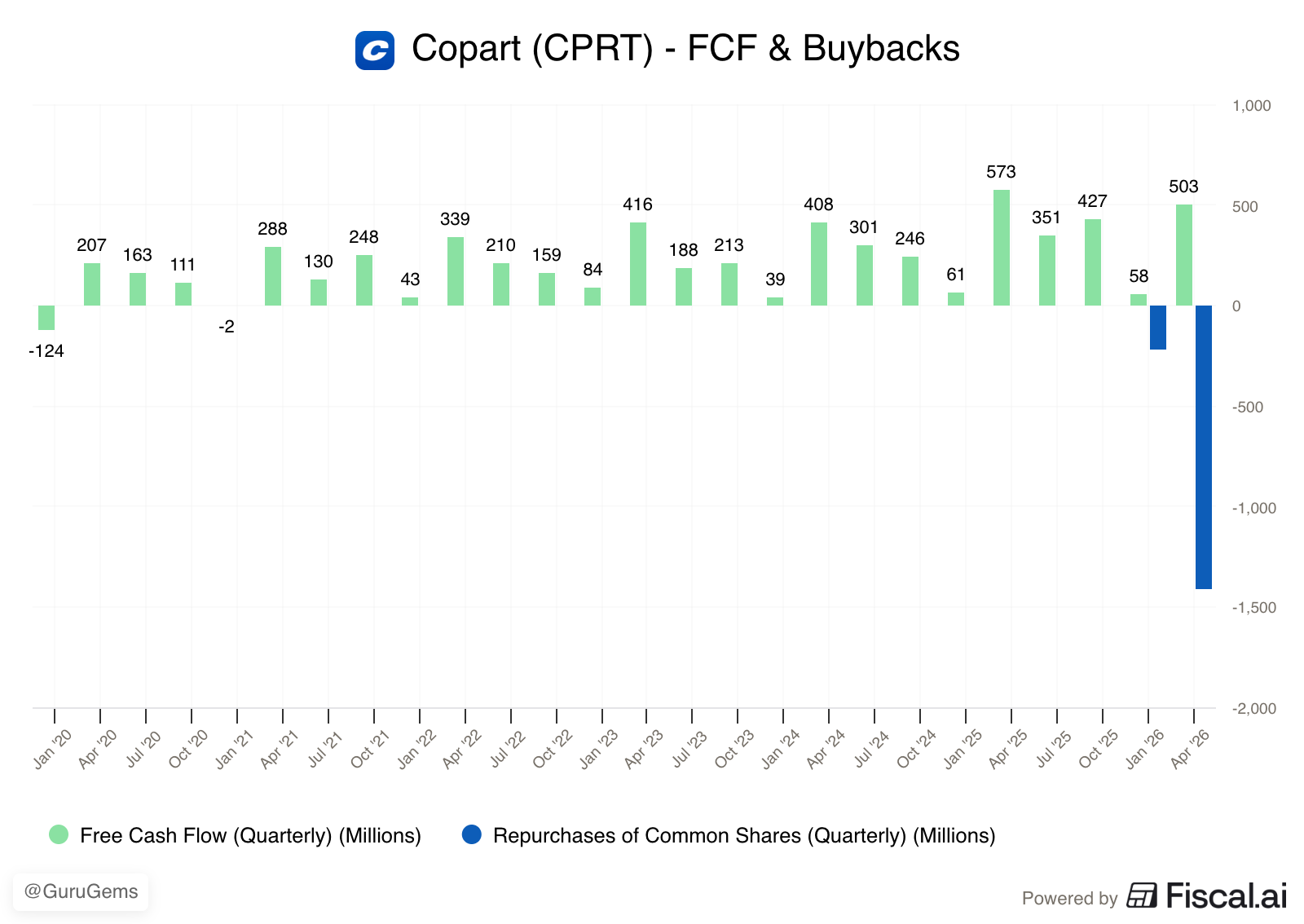
Management is buying back stock. After years of hoarding cash, Copart repurchased about $1.6 billion of shares over the past year (~6% of market cap), with the stock below analysts’ fair value.
Jay Adair returned as CEO on 31 July, replacing Jeff Liaw. He used a special investor call on 6 July, the first between-earnings call in Copart’s 32 years as a public company, to describe the consumer retrenchment as cyclical rather than structural.
That is exactly what I wrote in my last update on Copart in June. The stock has recovered to around $33 from roughly $28 in mid-July, and fiscal Q4 results in September will probably be the real test.
On the Guru side, the conviction also remains with Peter Keefe increasing his position by 68% (!) during Q2, making Copart his 4th largest position at nearly 9% of the portfolio.

Finally, here is a recent piece from the Fiscal.ai team on Copart with lots of interesting charts:

PayPal (PYPL)
PayPal has been on a rollercoaster over the past months, and this week was no exception.
I bought in November 2025 at an average price of $59.90. By February the position was down nearly 40%, after a weak fourth quarter and a CEO change that took the shares down 20% in a day.
Then in July, Reuters reported that Stripe and Advent had offered $60.50 a share, valuing PayPal at $53 billion. The shares jumped 16% on the day and kept climbing, and the position went back into the green in early August.
On Friday, Bloomberg reported that the talks are off, with the two sides unable to agree on price. PayPal’s management considered $60.50 too low and the shares fell 11%.
I have no intention of selling here. A buyer with the money to do it valued PayPal at $60.50 a share and the board thought that was too low. Whatever else that tells you, it means two parties who had done the work both put the business above where it trades today.
Lindsell Train made a similar point in a recent letter: “Regardless, this initial price discovery exercise is a helpful reminder of how unduly cheap PayPal has become.”
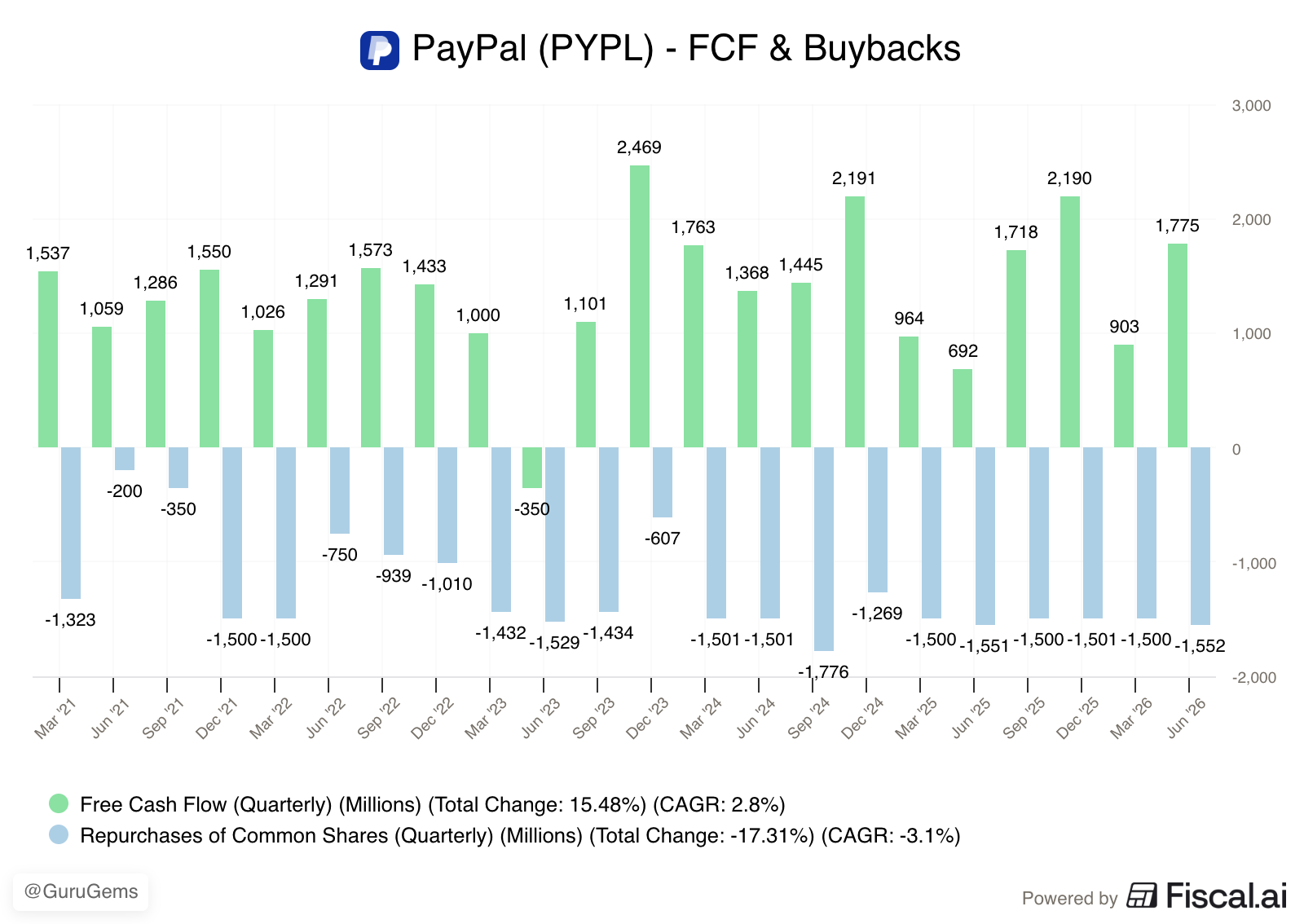
In the meantime PayPal continues to repurchase its own shares, spending pretty much all of their free cash flow on it:
Constellation Software (CSU) & CCC Intelligent Solutions (CCC)
Two other names caught in the SaaSpocalypse selling are slowly recovering. Constellation Software is up 23% over the past six months and CCC Intelligent Solutions is up 34%. Neither is back to where it started, but the thesis that AI would quickly commoditize workflow software is looking less obvious than it did in February.
👉 Full Guru Gems portfolio and all transactions are available in my Guru Master Google Doc.
👀 Watchlist update
Following the latest 13F filings a few weeks ago, I updated the Guru Gems watchlist, which now includes more than 40 companies that are in Gurus’ portfolios and that may be interesting to study in more depth.

Here are three names I’m now watching closely.
1. Netflix (NFLX)
Netflix was one of the most-bought new names across the Gurus in Q2, with new positions for Bill Ackman, Terry Smith, Wallace Weitz and Tom Gayner (very small position), and Oakmark and Tom Russo adding on top.
Ackman’s move is the one that made the news, since he sold his entire Netflix position in a single day in April 2022 for a loss of around $400 million.
One name to add to that list is Marc Werres from Hinde Group (no 13F available), who started buying Netflix again in Q1 2026, which I covered when I wrote about him.

He built his first position into the 2022 collapse, held it through a 75% drawdown, and trimmed above $1,000 in 2025 for 4.1 times his money over 41 months. He is now rebuilding after the shares fell more than 30% from their June 2025 high on AI disruption fears and the failed bid for Warner Bros. Discovery.
The share price went as low as ~$70 during Q2 so that is the best possible price the Gurus could have bought it. It’s currently trading ay ~$82 and if it were to drop below $80 again I may consider starting a small position.
2. Moody’s (MCO)
A clear trend in Q2 was the accumulation of positions in so-called ‘toll booths’, businesses that charge a small, non-negotiable fee or transaction tax for every use.
Moody’s was one of them: Moody’s takes a small fee on every bond issuance and collects it with almost no incremental work.
What was particularly interesting was Bryan Lawrence opening a brand new position. He runs a concentrated portfolio and can go several quarters without buying anything at all, so a new position in his portfolio is always worth paying attention to (see also the Guidewire Software position discussed above)
The shares are already up 20% from their Q2 lows, but I think it’s still worth taking a closer look at this Guru favorite.
3. Watsco (WSO) — a new one
François Rochon opened a small new position in Watsco in Q2, the largest HVAC (Heating, Ventilation, and Air Conditioning) and refrigeration distributor in North America.
My first question was whether this was a data center play, since every HVAC name has been re-rated on the AI buildout this year. But it is not. Data center cooling is applied equipment sold largely direct by Trane, Johnson Controls, Carrier and Vertiv, while Watsco distributes equipment to contractors, and roughly 75-80% of it is residential.
Watsco operates as a middleman distributor selling to local, licensed contractors. They have 13% of a fragmented $75 billion market with more than 2,000 competing distributors left to acquire, a net cash balance sheet, and demand that is 70-80% replacement, which is about as close to non-discretionary as building products get.
That is the kind of business Rochon tends to own for a decade.

Why did Rochon buy it now?
Weak residential volumes and consumers choosing to repair rather than replace took Q2 revenue up only 2% to $2.1 billion and EPS down 12% to $4.00, and the shares are nearly 40% below their 2025 highs.
Morningstar’s fair value of $433 against a share price of $313 is essentially a bet that the replacement cycle returns, which is probably the same bet Rochon is making.
There are 2 key risks to watch. Founder and CEO Al Nahmad is 85 and succession is unresolved even with his son A.J. as president. And HVAC distribution is a local business with low barriers to entry, so the consolidation runway may be smaller than it looks.
I added Watsco to the watchlist and this could be an interesting ‘boring’ company to explore a bit further.
👉 The full watchlist is in the Guru Master Google Doc, alongside the full portfolio and all transactions.
That’s it for this week…thank you for following along and I’ll be back next week.
Very good article, nice portfolio! Love your positioning on ABNB and UBER. MAGN I have highly ranked as deep value! 👍🏻