
Welcome to Round 13 of the Magic Formula Portfolio!
This is a series within Guru Gems where I test whether Joel Greenblatt’s Magic Formula still works.
Quick reminder if you are new to Guru Gems: while studying investing masters, I am creating two real-money portfolios to put my learnings into practice.
What’s new in Guru Gems
1/ Gem Spotlight: Uber is now a live page
Gem Spotlight is a new series where I follow one company from the Guru Gems portfolio: what the Gurus are doing with it, the latest results and the best writing on it.
Uber is the first Gem spotlight and I now update its page after each earnings report and each 13F season, so it’s worth bookmarking:

2/ Best of the Archive
I started refreshing some of my early posts. Many went out to fewer than 100 subscribers, so most of you haven’t seen them.
This week’s pick fits a Magic Formula issue: my post on Howard Marks’ The Most Important Thing. Joel Greenblatt is one of the investors who annotated a later edition of the book, and I’ve added Marks’ recent memos.

To learn more about my Guru Gems journey, start here.
And now back to our Magic Formula…
Magic Formula Refresh
In ‘The Little Book that (Still) Beats the Market’, Joel Greenblatt suggests that a regular investor can beat the market averages by buying a group of ‘good’ companies at ‘cheap’ prices.
‘Good’ → High return on capital
‘Cheap’ → High earnings yield
Since he expects the magic formula to work on average, Greenblatt suggests owning a basket of 20-30 stocks, to buy this basket over the course of a year, and to hold each stock for exactly one year.
So that’s exactly what I’m doing…
Current Portfolio Performance
What a month it has been for the Magic Formula portfolio.
It returned 8% over the past month, while the S&P 500 fell more than 5%.
On a YTD basis, the portfolio is now up +24%, well ahead of the S&P 500 index (+7.8%).
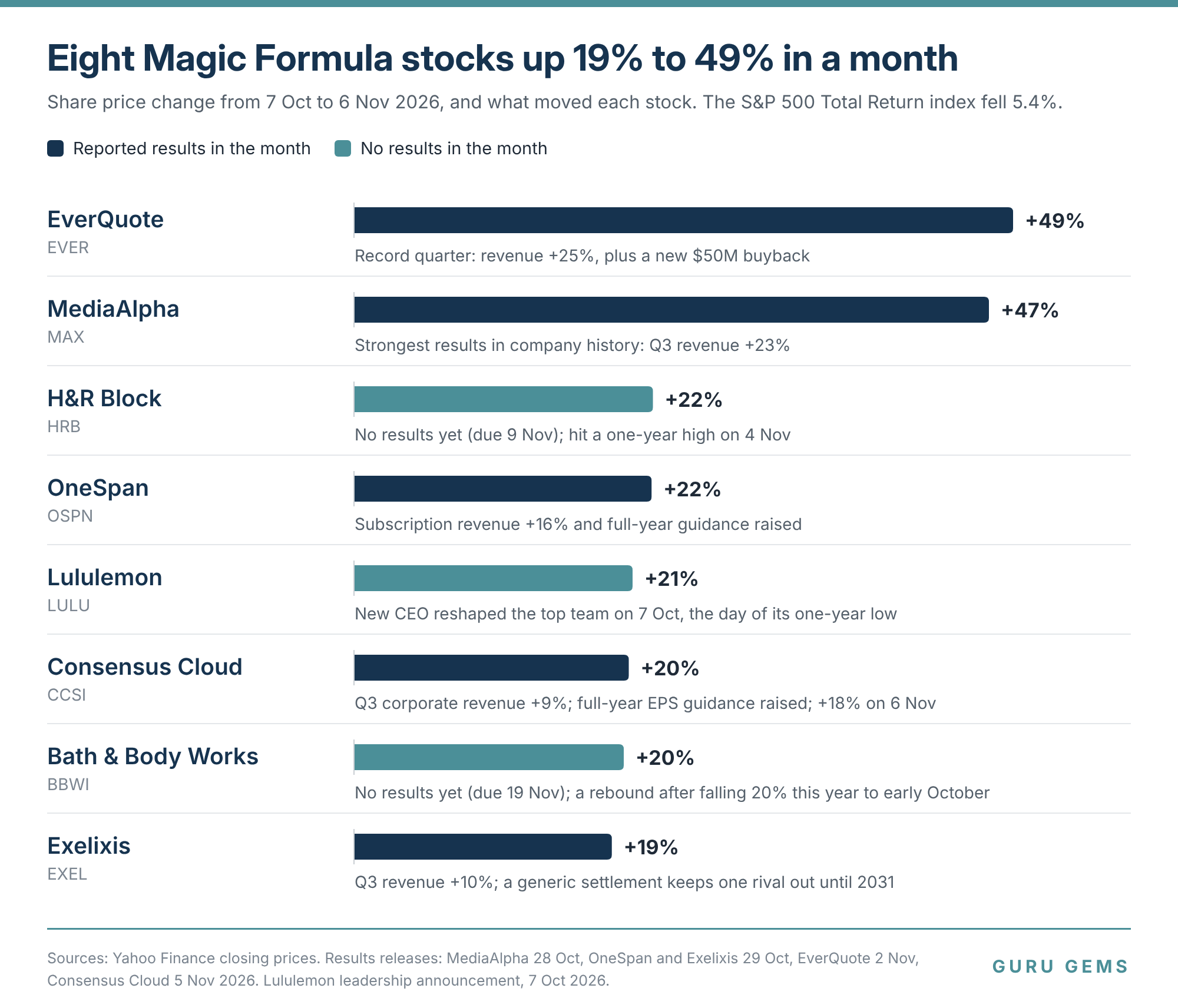
We’re in the middle of earnings season, and several names reported very strong results that sent their share prices up sharply:
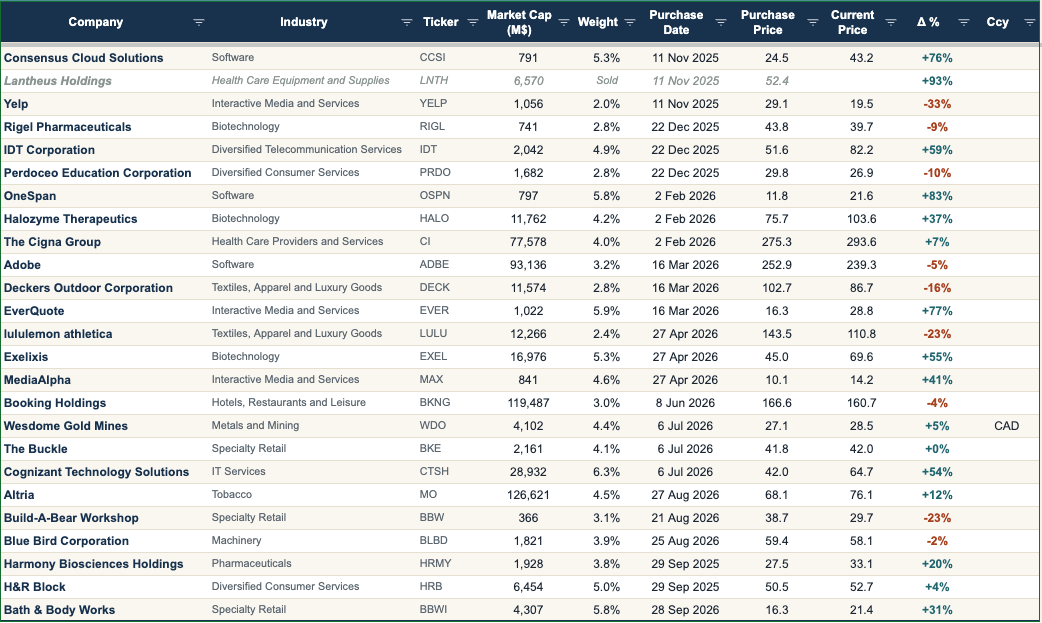
Here is the latest overview of the full portfolio, which you can access at any time here.
“If you are able to stick with the magic formula strategy through good periods and bad, you will handily beat the market averages over time” — Joel Greenblatt
Selling Cohort 4
Greenblatt’s rule is to hold each stock for exactly one year, then sell.
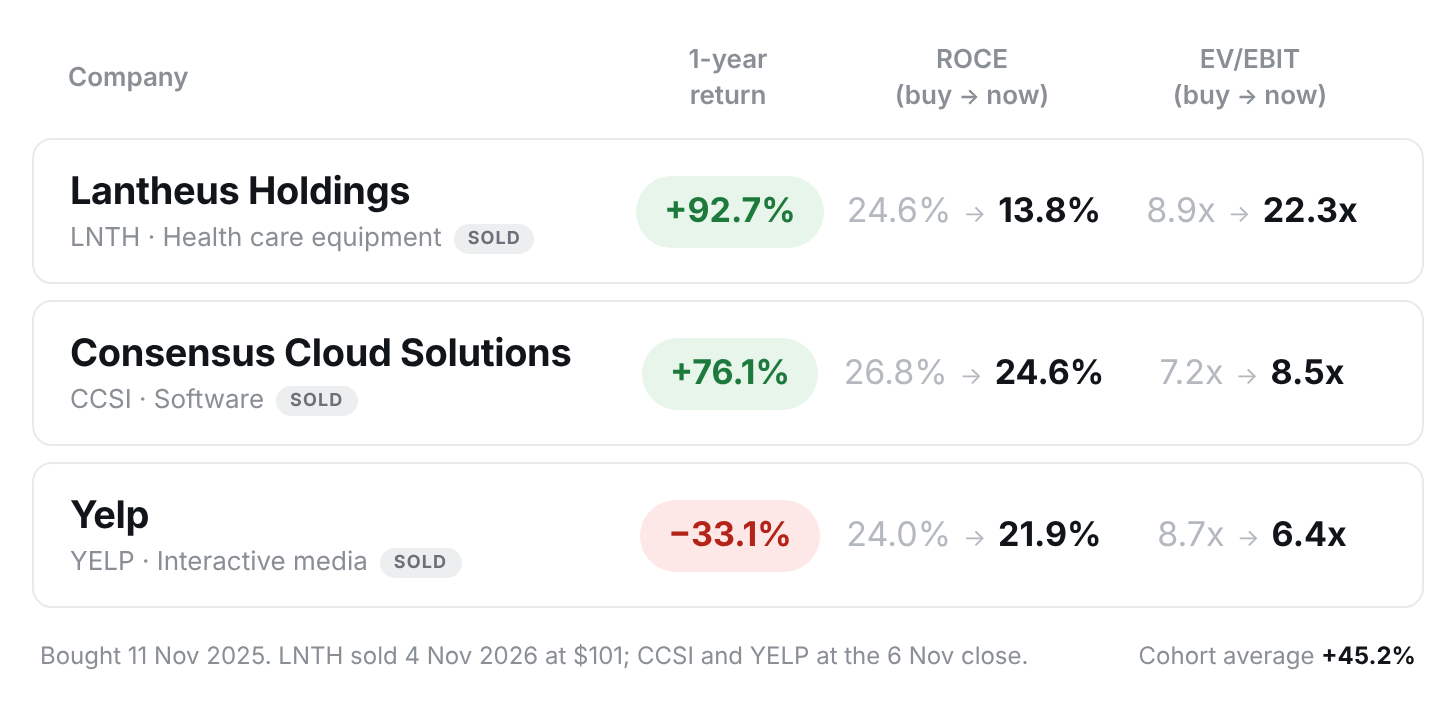
This week I am selling the names I bought on 11 November 2025: Consensus Cloud Solutions (CCSI), Lantheus Holdings (LNTH), and Yelp (YELP).
Lantheus (LNTH) more or less sold itself. On 3 August, Lantheus and Curium, another radiopharmaceutical company, announced a merger: Curium will acquire all Lantheus shares for $102.50 per share in cash when the deal closes.
I sold my position earlier this week at $101 (where it trades now, just below the deal price), which makes for a very nice 93% return!
Consensus Cloud Solutions (CCSI) jumped 18% on Friday after its Q3 results where it raised its full-year EPS outlook, and it leaves the portfolio with a 76% return.
Yelp (YELP) is the ugly duckling of the group and leaves with a 33% loss.
New Magic Formula Stocks
As I explain in detail in my first Magic Portfolio post, I use Joel Greenblatt’s Magic Formula screener combined with financial ratios data to identify the top stocks in terms of combined rank for Return on Capital (using ROCE) and Earnings Yield (using EV/EBIT).
I extend the analysis with additional criteria: P/FCF (an alternative valuation lens to EV/EBIT), Revenue 5yr CAGR (is the company still growing?) and Net Debt/EBITDA (how much debt is on the balance sheet?).
Nutex Health (NUTX, Market cap $1.2B)
Magic Formula metrics: ROCE 64% (3yr: 54%); EV/EBIT 3.5x; P/FCF 5.2x; Net Debt/EBITDA 0.4x
Nutex ranks first or second on both of my rankings, and at 3.5x EV/EBIT it is one of the cheapest names on the whole screen.
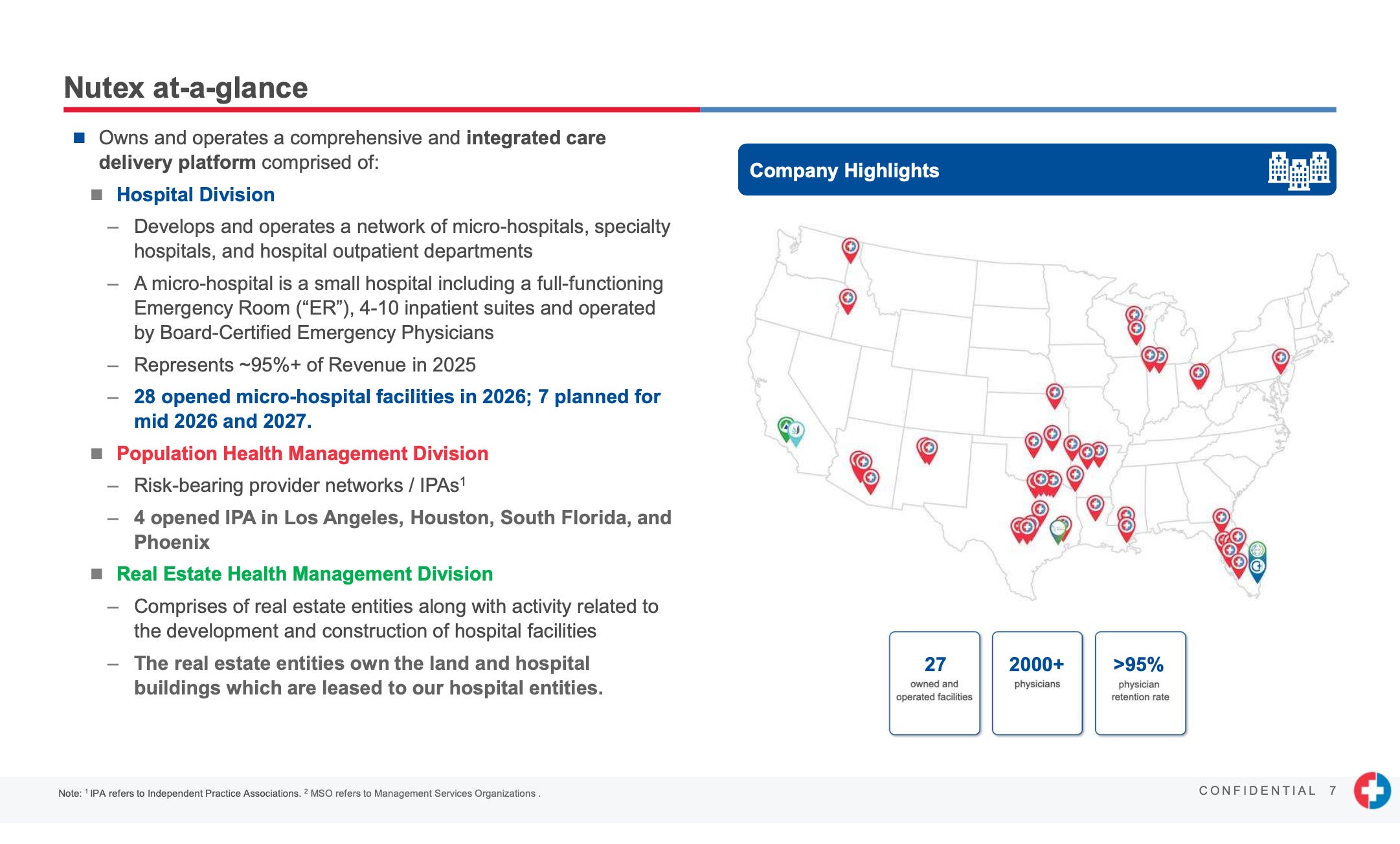
Nutex runs 28 hospital facilities in 12 US states, mostly micro-hospitals and specialty hospitals, plus a smaller population health business.
Why it is cheap
Nutex generally operates out-of-network, so it has no negotiated rates with insurers. Under the No Surprises Act, it can take payment disputes to independent arbitration, and it does so on a large scale: 50-60% of its billable visits go through arbitration, and it says it won more than 80% of the decisions over the last nine months.
That makes profits depend on a regulatory process the insurers are fighting. The 10-Q lists lawsuits by insurers against Nutex’s arbitration provider (HaloMD), securities class actions and short-seller reports among its risks.
The numbers are also not looking pretty. Q3 revenue fell 19% to $218M and operating income fell 41% to $77M. Receivables rose to $356M from $319M at the start of the year, and nine-month profit includes a one-off $52.3M cost reduction from a new agreement with HaloMD.
What the price is ignoring
Even after a weaker year, Nutex earned $40M in Q3 for its shareholders, holds $250M of cash, and bought back $51M of its own shares in the first nine months.
At 3.5x EV/EBIT, the market does not expect these profits to last. The formula picked it anyway and this is definitely a name I would never have picked myself.
AngloGold Ashanti (AU, Market cap $47B)
Magic Formula metrics: ROCE 44% (3yr: 33%); EV/EBIT 7.0x; P/FCF 9.9x; Net cash
AngloGold is one of the largest gold miners in the world, with mines in Africa, Australia and the Americas, and headquarters in London, Denver and Johannesburg.
It ranks fifth and seventh on my two rankings.
This will be the second gold miner in the portfolio after Wesdome.
Riding the gold price
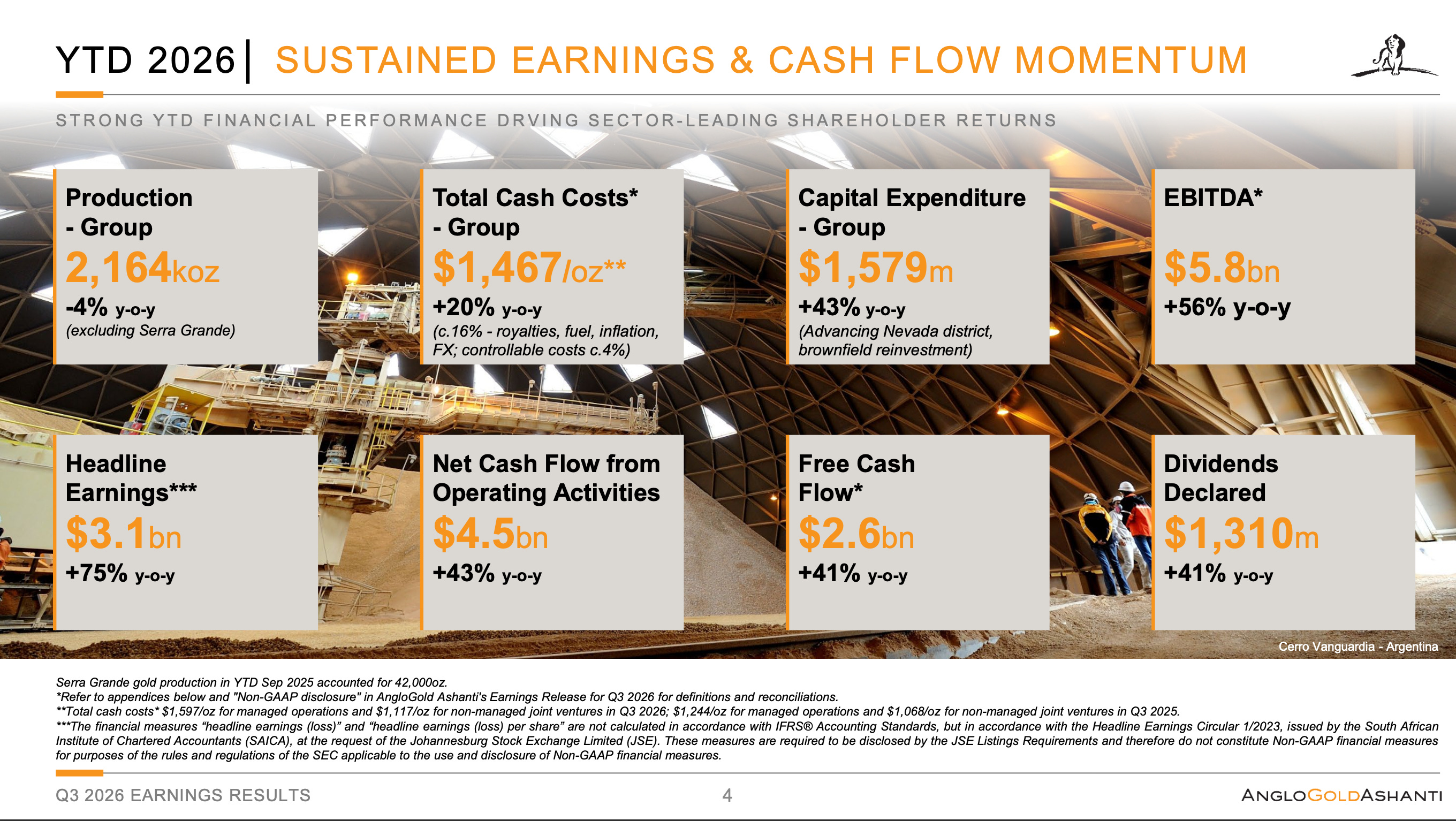
The Q3 results (5 November) show what a record gold price does to a miner:
Average gold price received of $4,239/oz, up 21% from a year ago
EBITDA up 12% to $1.57B, and $2.6B of free cash flow so far this year
Net cash of $1.26B, against $231M a year ago
$1.31B of dividends declared so far this year
Key risks
Highly correlated with the gold price. ROCE of 44% sits well above the 33% three-year average. If gold falls back, returns will fall as well.
Costs are rising. All-in sustaining costs rose 26% to $2,170/oz, and Q3 production fell 9%. Management attributes 61% of the rise in cash costs per ounce to external factors such as gold-linked royalties and energy prices.
Concentration. With Wesdome, the portfolio now has two names that move with the same commodity.
HP Inc. (HPQ, Market cap $26B)
Magic Formula metrics: ROCE 33% (3yr: 32%); EV/EBIT 8.3x; P/FCF 6.7x; Net Debt/EBITDA 1.3x
HP sells PCs and printers. It ranks 12th and 13th on my two rankings.
Is it a value trap?
I skipped HP in Round 10 because it had been on the screener for a long time while the share price drifted lower. I think that concern is still valid:
Printing is in slow decline. Printing revenue fell 2% in Q3, with hardware units down 7%.
PC units are falling. Personal Systems revenue grew 18%, but units were down 16%. HP is raising prices to pass on higher memory costs.
Sales are lower than five years ago. HP fails the revenue growth filter in my screener.
Morningstar rates HP no moat, with a fair value of $28, close to the current share price.
So why am I adding it this time?
Because HP is up 30% since Round 10, when I decided to skip it. That’s a good reminder that I shouldn’t be making these calls and should let the formula do its thing.
What the formula sees
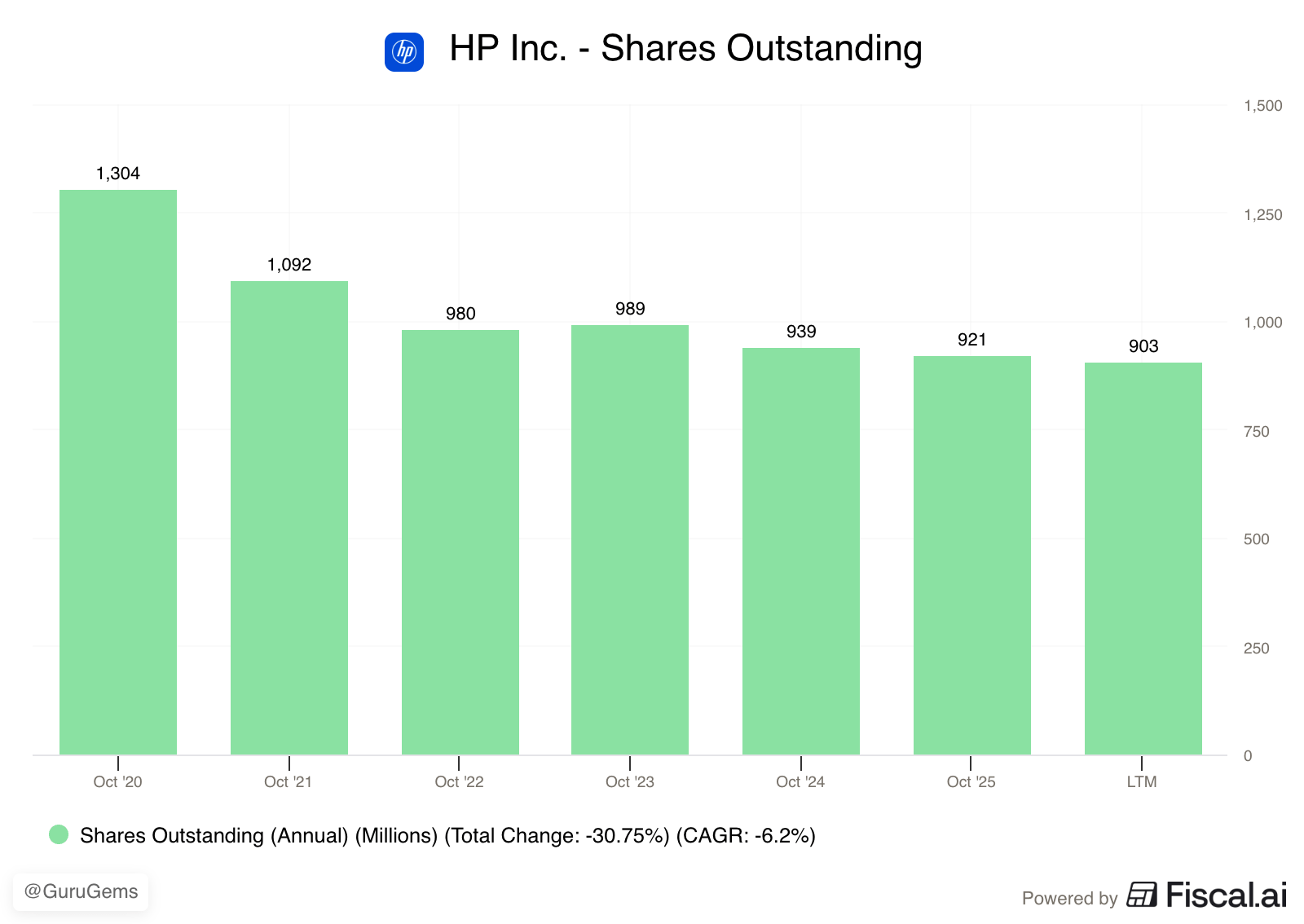
HP generates a lot of cash for what it is. It expects $3.0-3.2B of free cash flow this year, and it returns most of it: $600M in Q3 alone through dividends and buybacks, with shares outstanding down to 903M at the end of July from 939M a year earlier, and from 1,304M in October 2020.
The other change is at the top. Enrique Lores left HP to become CEO of PayPal, and Bruce Broussard has been interim CEO since February.
On 4 November, HP named Emma Walmsley, who ran GSK from 2017 to 2025, as its new CEO, starting 4 January 2027.
While her background is in cosmetics (L’Oréal) and pharmaceuticals (GSK), Walmsley also knows the tech sector well: she has been on Microsoft’s board for seven years.
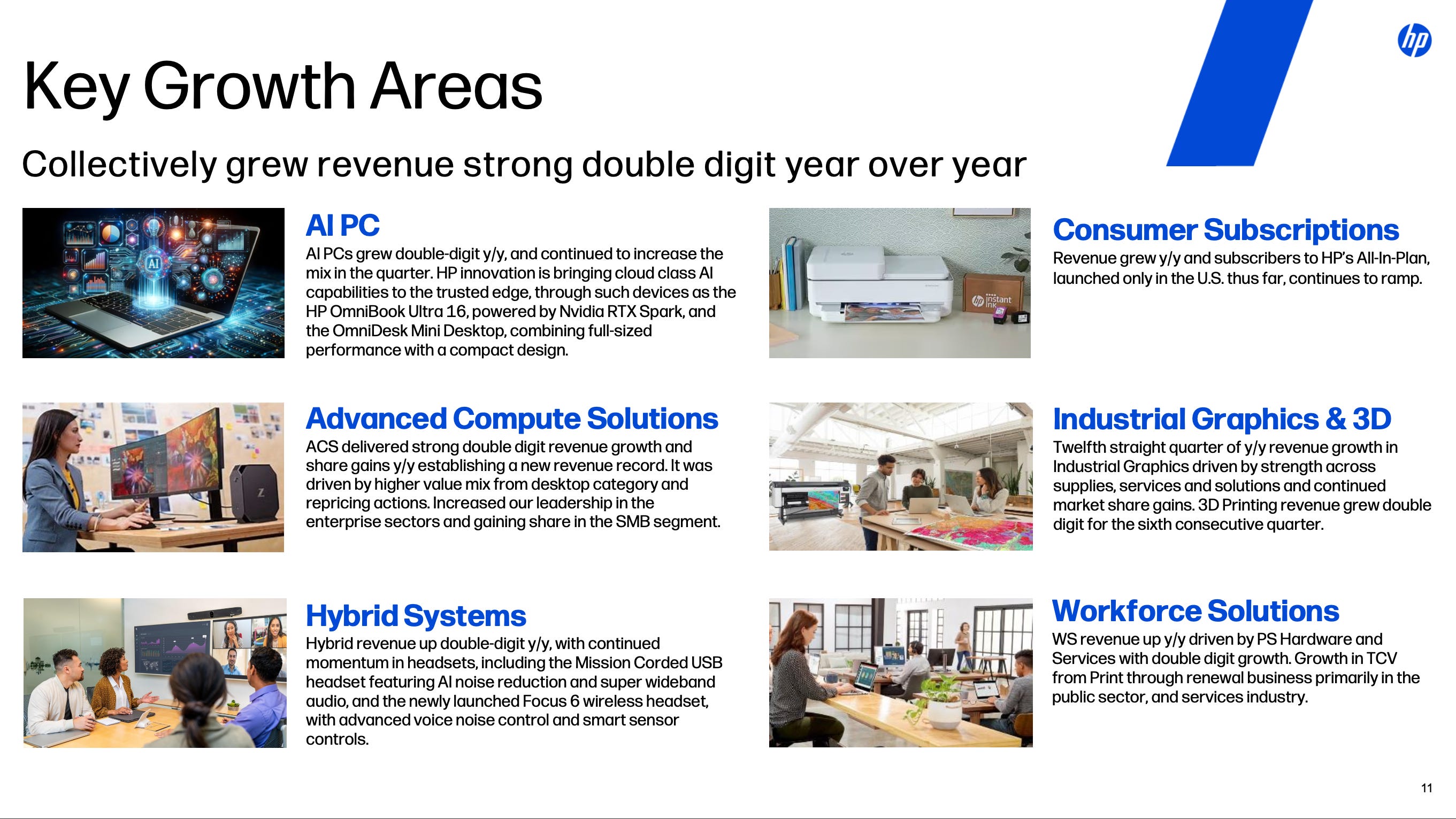
In HP’s announcement she said she will focus on “harnessing the power of the AI era”. AI PCs are one of the six growth areas HP highlighted in its Q3 presentation:
Three names out, three names in, the portfolio remains at 25 stocks.
That’s it for this week! Please like or share if you enjoy reading Guru Gems.
You can follow me on Substack @gurugems and X @guru_gems for more insights.
Until next week!