

Welcome back!
Last month I went through the Q2 13F filings and wrote about the trends across the Gurus I track. Alphabet is still the ultimate Guru Gem, the toll booths (Visa, Mastercard, Moody's, S&P Global) kept attracting buyers, and Netflix and Uber showed up in many portfolios.

In today’s post I will highlight 3 names which have stayed somewhat under the radar:
🏗️ Builders FirstSource (BLDR): a building materials company near its 52-week low, with two value investors buying
🛒 Sea Limited (SE): the largest holding in a Davis Advisors fund, and a company Howard Marks bought again
💉 Becton Dickinson (BDX): Marc Werres’s first new position since 2022, and the only ‘special situation’ in the Hinde Group portfolio
Let’s jump in.
New to Guru Gems? Start here.
🏗️ Builders FirstSource (BLDR)
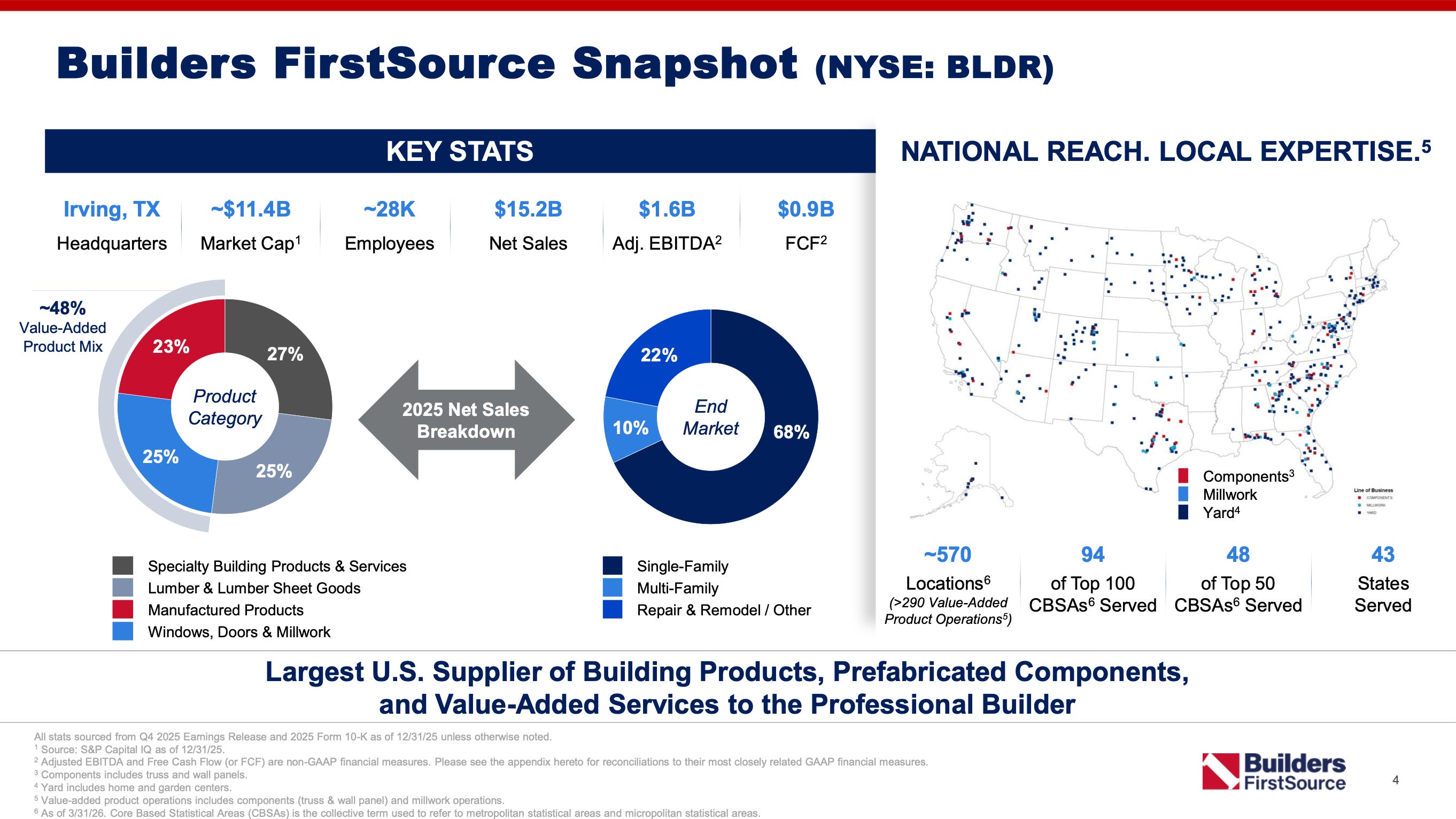
Builders FirstSource is the largest supplier of building materials to professional homebuilders in the United States. It manufactures roof and floor trusses, wall panels, windows, doors and millwork, and it distributes lumber and everything else that goes into a house, from approximately 570 locations across 43 states.
The numbers are ugly
Second quarter net sales fell 9% to $3.9 billion, gross margin dropped 260 basis points to 28.1%, and adjusted EBITDA came down 34.9% to $329 million. The company posted a small net loss of $3.9 million against net income of $185 million a year earlier.
Management cut full-year guidance to $14.0-$14.8 billion in sales and $1.0-$1.2 billion in adjusted EBITDA, assuming single-family starts down nearly 7%. [‘Housing starts’ is an economic indicator that reflects the number of privately owned new houses on which construction has been started]
Net debt to EBITDA has gone from 2.3x a year ago to 3.6x, as the result of EBITDA collapsing under the same amount of debt.
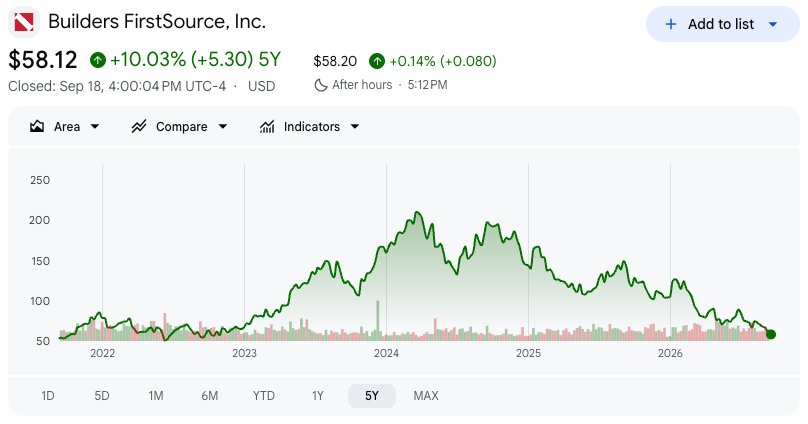
The stock closed at $58.12 on 18 September, roughly 2.8% above its 52-week low of $56.56.
Guru endorsements
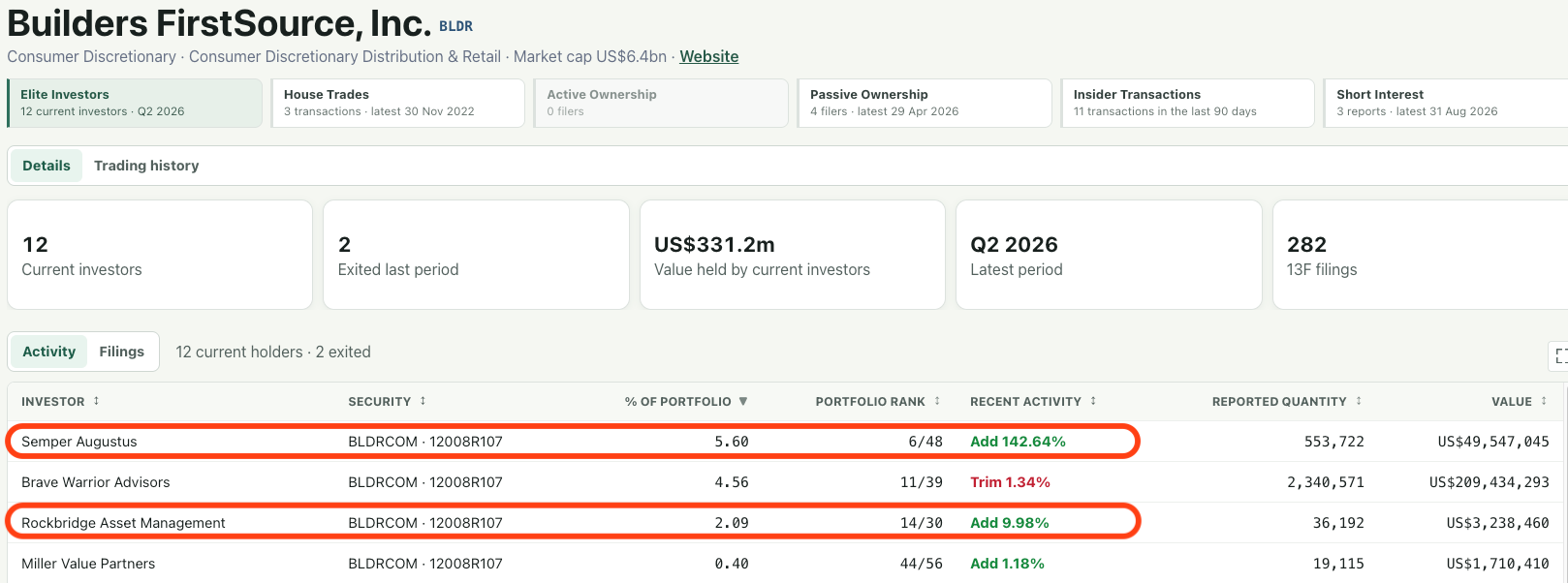
Christopher Bloomstran (Semper Augustus) initiated a position in BLDR in Q1 2026 and then increased it by 143% in Q2. It is now his seventh-largest holding at 5.6%, just behind Dollar General, Deckers Outdoor and Dollar Tree. Bloomstran is known for writing a hundred-page annual letter dissecting Berkshire’s book value, and Berkshire remains his largest position at 25.6%.
Peter Keefe (Rockbridge Asset Management) increased his BLDR position by 10% in Q2, to a little over 2% of his portfolio. Across roughly 30 holdings, Builders FirstSource and Copart were the only two existing stock positions he added to.
I covered Keefe and his Copart thesis in issue 17, and Copart came up again in last week’s edition.

François Rochon, Miller Value Partners and Tweedy Browne also appear, but at very small sizes of the portfolio.
One more piece of context that I’ll come back to later. Edgar Wachenheim’s Greenhaven Associates has roughly 38% of its $8.7 billion portfolio in four homebuilders: Lennar, Toll Brothers, PulteGroup and DR Horton. BLDR is not in the list, though he is clearly making the same directional bet on US housing.
Why it might work
The bull case for BLDR is based on the shortage of housing in the US. Homes in the US have been underbuilt by one to four million since 2010, according to BLDR’s own estimates.
BLDR has also used the downturn to shift its mix towards higher-margin value-added products like prefabricated components and millwork, now around 48% of sales.
Since August 2021 the company has also repurchased nearly 50% of its shares outstanding.
How much did the Gurus pay?
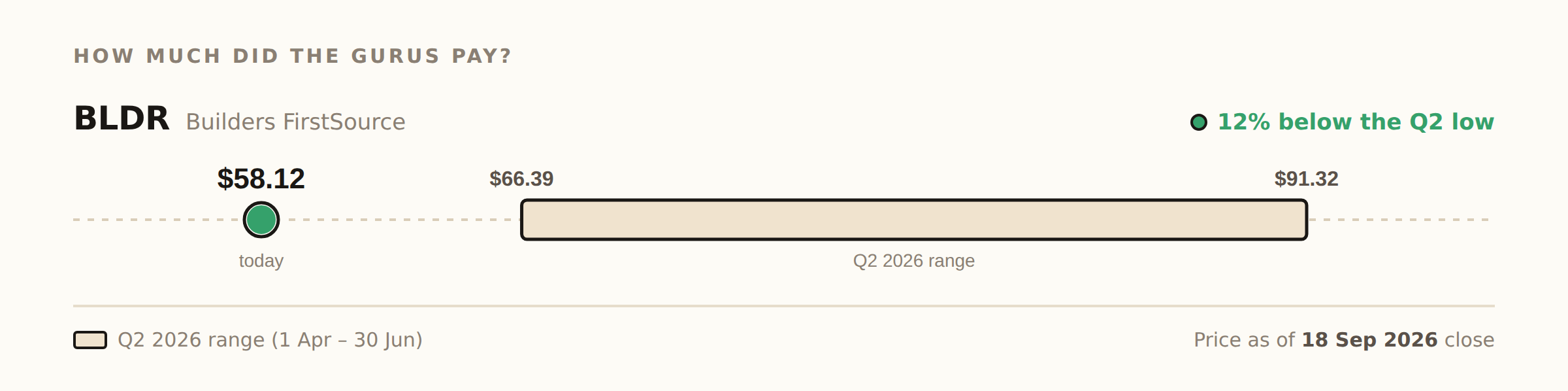
Bloomstran and Keefe were both buying through the second quarter, which BLDR ended at $89.48. At $58.12 today, anyone following them is paying 12% less than the Q2 low.
On an EV/EBIT basis, BLDR also doesn’t look very cheap:
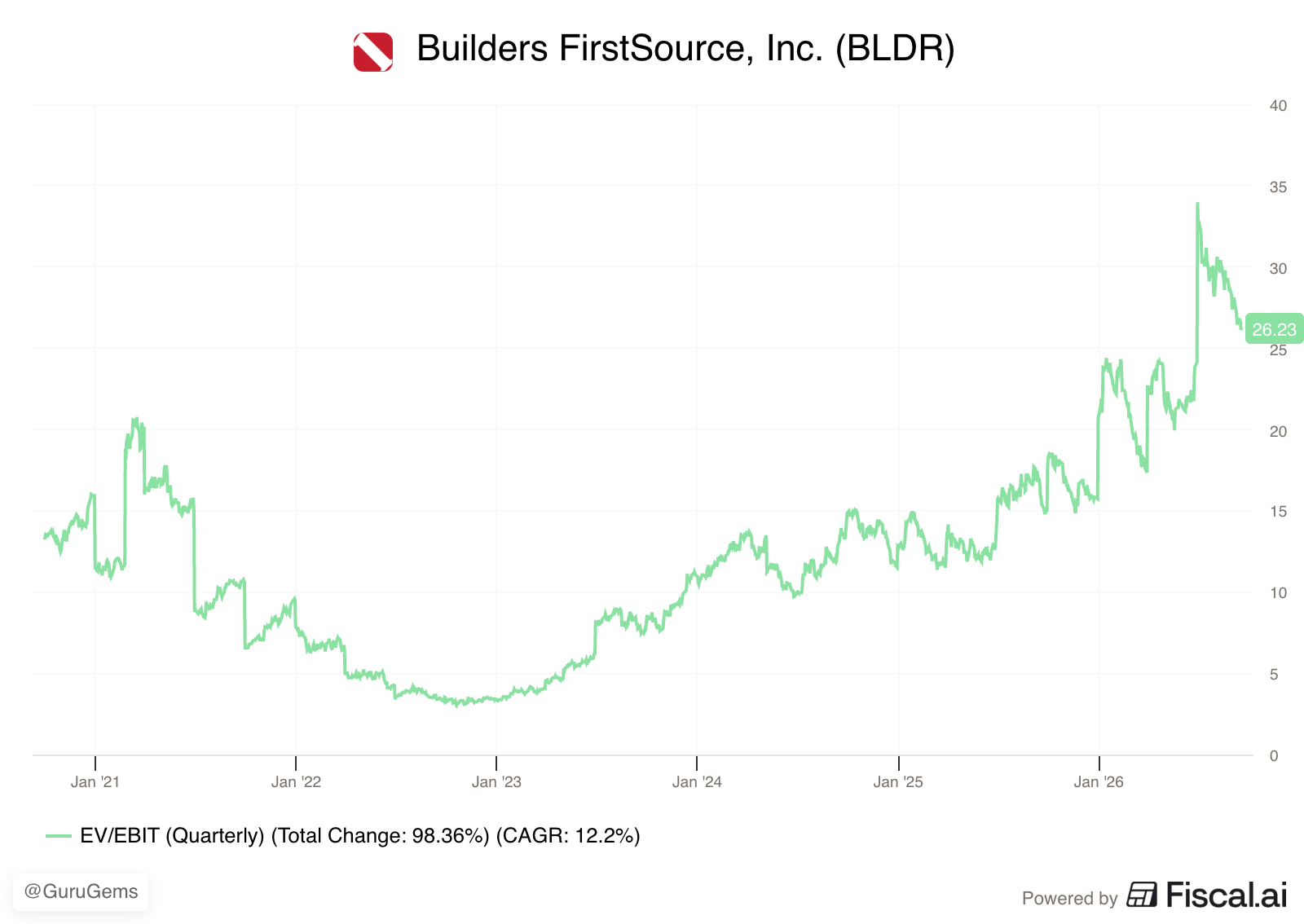
📌 BLDR is a pass for me
Revenue has fallen every year since 2022 and is guided lower again in 2026, net leverage has climbed to 3.6x against 2.3x a year ago, quarterly free cash flow is down to $32 million, and the housing outlook got worse rather than better between the first and second quarter guidance. Add to that an industry I know very little about and the result is that I will skip it for now.
→ If you enjoy this newsletter, please subscribe and help others discover it by clicking 🤍
→ If you find value here, consider buying me a virtual coffee ☕
🛒 Sea Limited (SE)
Sea Limited is a Singapore-based company running three businesses across Southeast Asia, Taiwan and Brazil:
Garena, a gaming studio, built around Free Fire
Shopee, the region’s leading e-commerce marketplace by gross merchandise value
Monee, its digital financial services arm, mostly consumer and small-business lending

A very good quarter
Second quarter revenue was $7.8 billion, up 48% year on year, with net income of $458 million and adjusted EBITDA of $917 million, up 11%.
Shopee’s gross merchandise value (GMV) grew 28% to $38.3 billion, its eighth consecutive quarter of sequential growth, and management reaffirmed full-year GMV growth of around 25%. Core marketplace revenue (fees and advertising) grew 66%. The VIP programme passed 15 million members, up 45% in a single quarter, and those members already account for 24% of Asia GMV with about 80% monthly retention.
Monee’s loan book reached $11.1 billion, up 62%, with 90-day non-performing loans at 1.0%, though margins are compressing as it pushes into new products and countries.
Garena is the softer piece. Bookings, meaning the cash players actually spent inside its games, still grew 15% year on year, but the business still leans heavily on one title. Free Fire is in its ninth year, and Garena has yet to prove it can launch another game at that scale.
Despite the strong quarter, the stock is at ~$102, which is around 48% below its 52-week high.
Guru endorsements
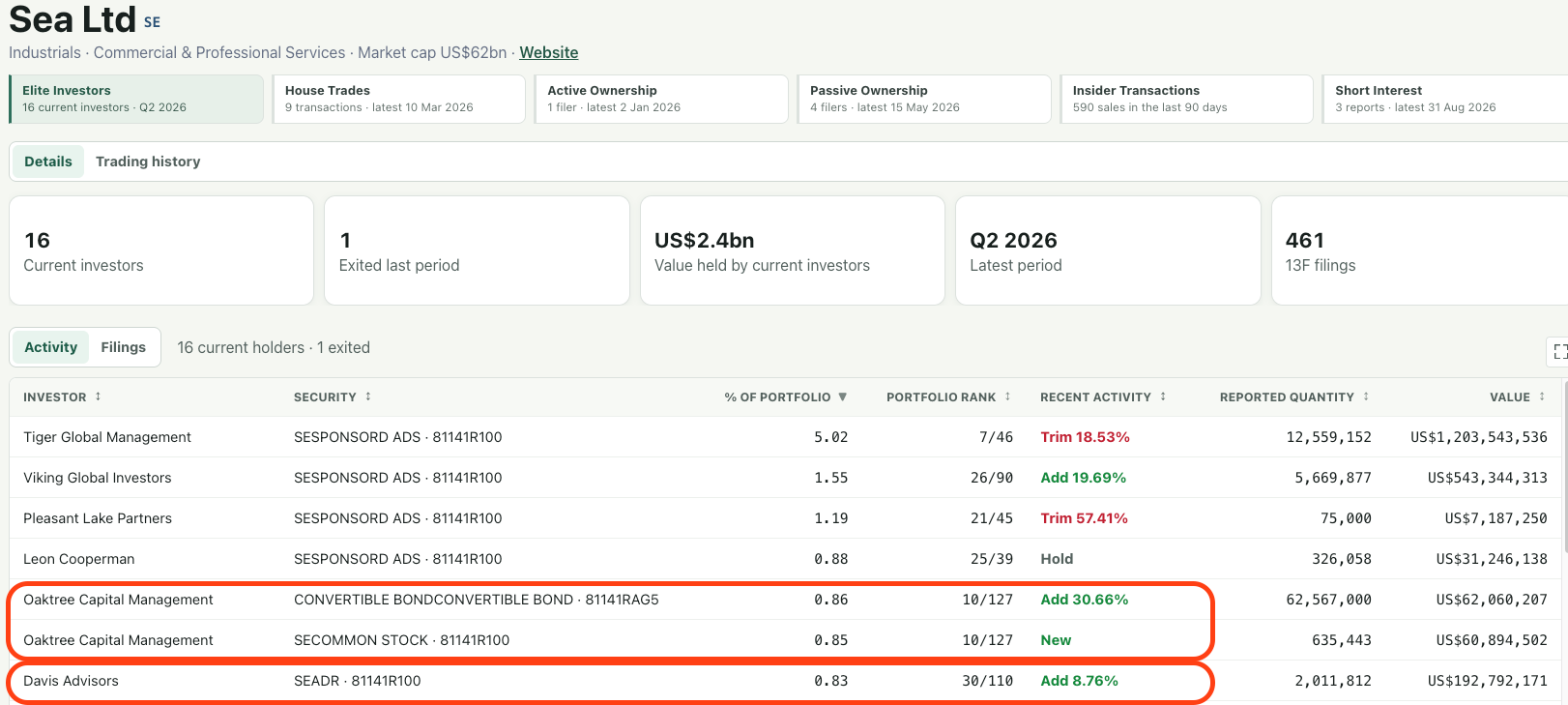
Davis Advisors
Chris Davis holds SE at 0.83% of the firm-wide 13F, which may look trivial. However, inside the Davis Select International ETF (DINT), a 28-stock fund run by Danton Goei that looks for high-conviction, best-of-breed businesses outside the US, Sea Limited is the single largest holding at nearly 6% as of 15 September.
“[The companies we hold] have solid earnings, yet are 13% less expensive than the benchmark. This valuation gap is among the widest we have ever seen.”
— Danton Goei, Davis Select International ETF
I profiled Chris Davis and the Davis approach back in issue 7:

Other Gurus
Howard Marks’ Oaktree first bought SE in Q2 2025, then added higher, then sold everything, and in Q2 came back to the stock again, buying it at roughly half the price but 4 times the previous position. The Q2 2026 position is 1.61% of the reported portfolio.
Also worth noting: Tiger Global still holds SE at 5% of its portfolio, the largest weighting of any filer on the list, even after reducing by 18.5%. Viking Global added 19.7%, and Stephen Mandel’s Lone Pine opened a new position.
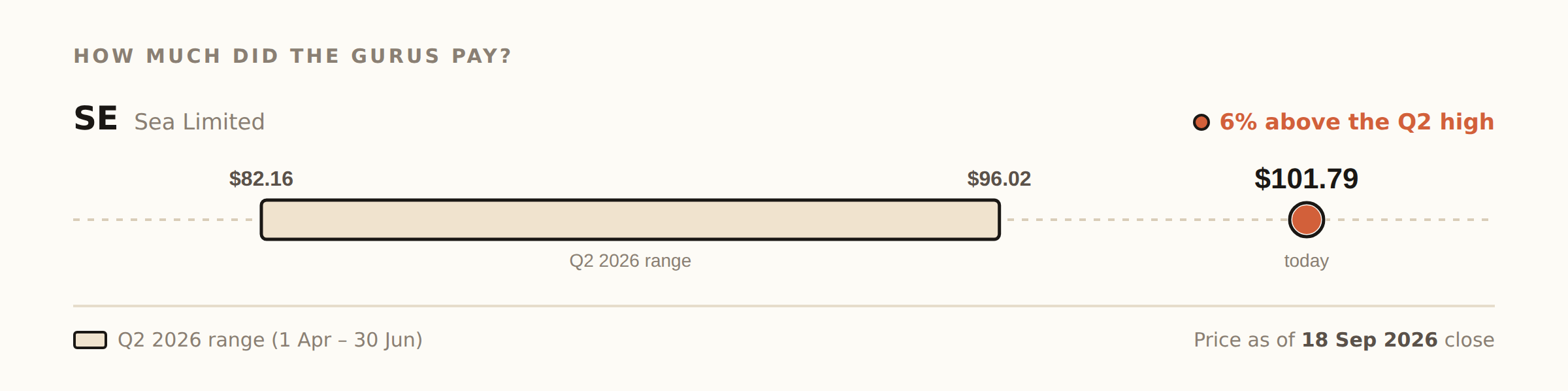
How much did the Gurus pay?
The stock closed this week 6% above the Q2 high, but as mentioned earlier still significantly below its 52 wk high and also well below Morningstar’s fair value estimate of $152.
📌 Sea is already on my watchlist
I will move it up the list. It’s a genuinely interesting business and I’ll be taking a closer look before taking a starter position.
💉 Becton Dickinson (BDX)
And now one I’ve been watching for a while.
Becton Dickinson makes the unglamorous consumables of modern medicine: syringes, catheters, infusion pumps, prefillable syringes for injectable drugs, surgical products. Roughly 90% of hospital patients encounter at least one of the more than 45 billion products BD manufactures each year. More than 60% of revenue comes from the US.
It is a business most investors find boring, and it has been a poor stock for five years.
Marc Werres bought it as a special situation
In May I wrote a deep-dive on Marc Werres, founder of Hinde Group and one of the best investors almost nobody has heard of. Since inception in August 2015 through the end of Q2 2026, Hinde has compounded at 20.4% net per year against 14.3% for the S&P 500, with fewer than ten positions and no leverage.

Werres divides his universe into two buckets. Compounders are great businesses he intends to hold indefinitely, and they make up most of the portfolio. Special situations are less-than-great businesses trading at a discount, where a specific catalyst is expected to close the gap within about two years.
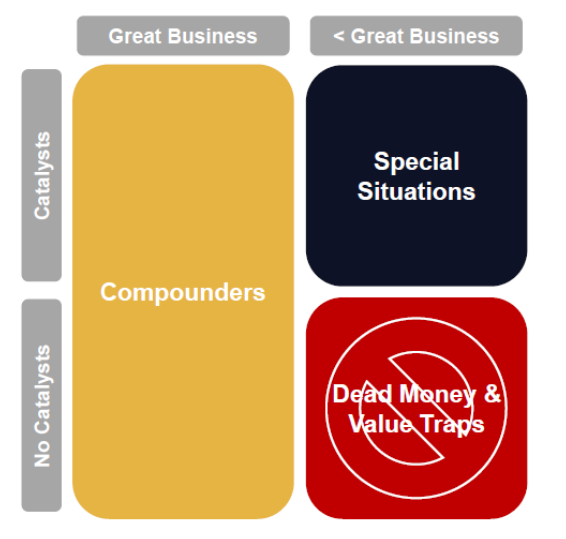
In July 2025 he opened a position in BDX. It was his first new position since 2022, and the only special situation in his portfolio.
Here is how he described the business in his Q3 2025 letter:
“In many of its product lines, BD has leading, if not monopoly-like, market shares that have been stable for decades... BD’s market power is plainly evident in the levels of its gross margin (54.7%), operating margin (25.0%) and return on tangible invested capital (40%+).”
“BD falls just short of a great business... All that is to say while BDX is a special situation investment, it is an especially attractive special situation because BD is almost a great business.”
The catalyst has already happened
The specific event Werres was underwriting was the Reverse Morris Trust transaction with Waters Corporation.
BD spun off its Biosciences and Diagnostics Solutions business, about $3.3 billion of revenue, and simultaneously merged it into Waters. The deal closed on 9 February 2026. BD received $4 billion in cash, and shareholders received 0.135 Waters shares per BDX share, worth $44.86 per BDX share at Waters’ opening price that day.
Werres added to the position in Q4 2025 and sold the Waters shares he received. BDX contributed 1.95% to Hinde’s gross return in 2025 and another 0.84% in Q1 2026.
In his Q1 2026 letter, with the stock around $160, he shared the following:
“BDX would have to trade at more than $230 per share today to bring the prospective return on the stock closer to a market-level return.”
He also noted that BD’s highest priority use of free cash flow right now is buying back stock, and that the remaining catalyst is the company consistently hitting its mid-single-digit organic growth target, which he expects from fiscal 2028.
There was no update on BDX in the Q2 2026 letter, which I assume means that the position remains unchanged. (Hinde does not file a 13F, so the partner letters are the only insights we get.)
Guru endorsements
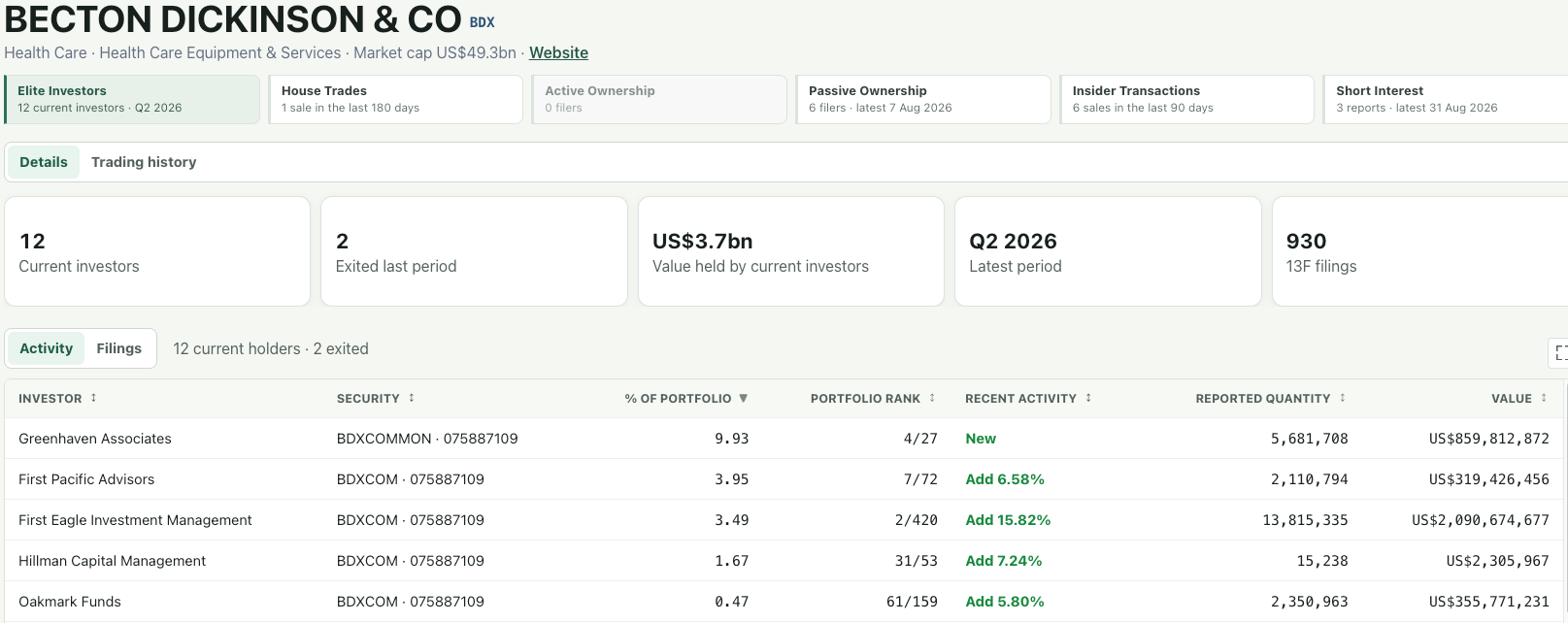
Werres is not alone, and the largest holder on this list is an interesting one.
Greenhaven Associates opened a brand new BDX position in Q2, making it the fourth-largest holding at 10% of an $8.7 billion portfolio.
Greenhaven is run by Edgar Wachenheim III, author of Common Stocks and Common Sense. Portfolios he managed returned an average of more than 18% annually from 1990 to 2014, with conservative stocks and no leverage, and his top ten positions are 79% of the portfolio. He looks for cyclical, cash-generative businesses trading well below normalised earnings, and he is explicit about being early: he was buying housing in 2011 and airlines in 2010-2012.
This is the same investor with 38% of his portfolio in homebuilders, which is where I started this post. Wachenheim is placing two large, unfashionable bets at the same time.
First Pacific Advisors added 6.6%, First Eagle added 15.8%, and Bill Nygren at Oakmark added 5.8% to a small position.
Where things stand now
The third quarter, reported on 6 August, was the first clean quarter for the slimmed-down company:
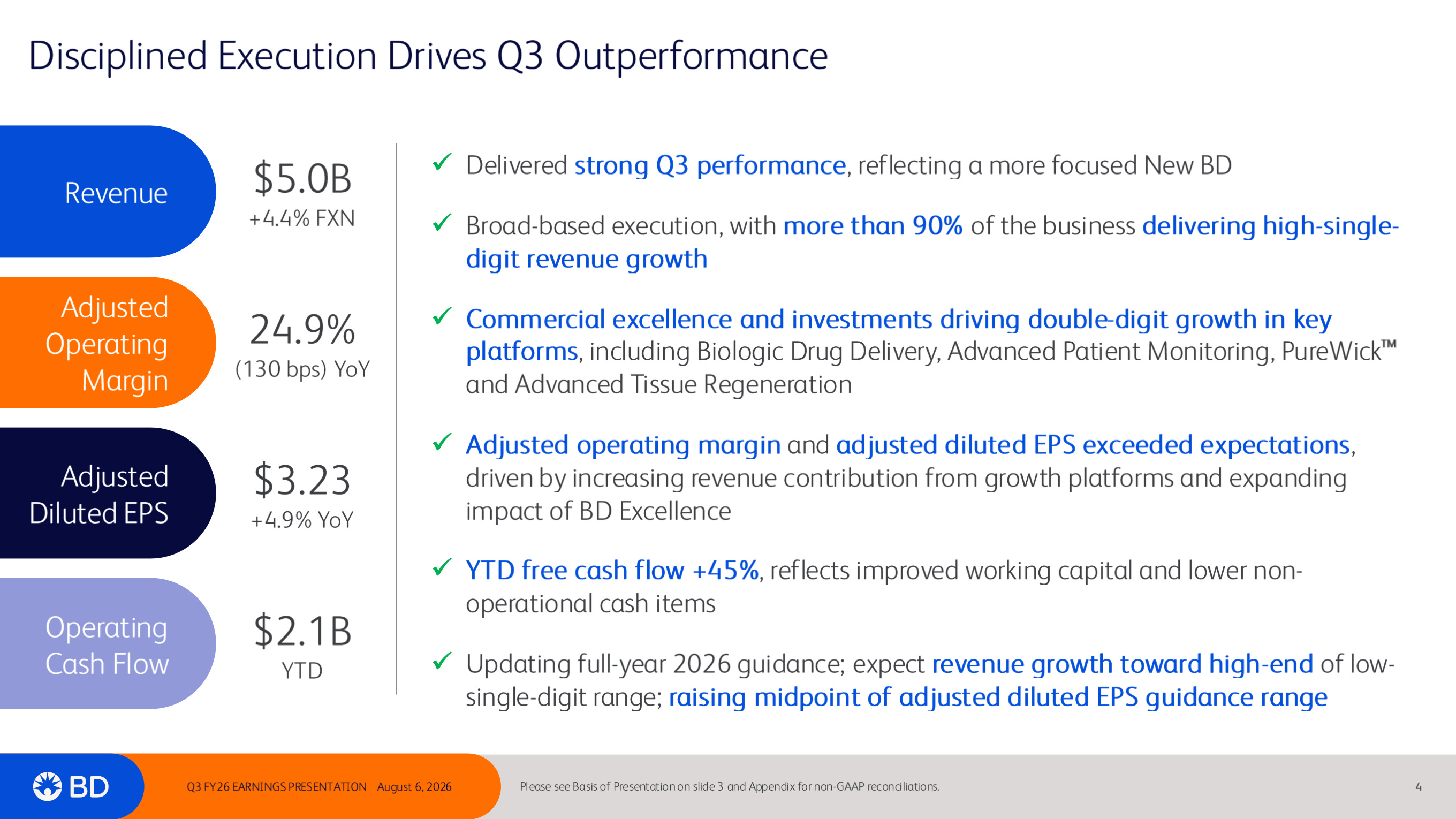
More than 90% of the portfolio delivered high-single-digit revenue growth, and management raised the midpoint of full-year EPS guidance to $12.62-$12.72. They have returned $3.1 billion to shareholders so far this year, $2.3 billion of it in buybacks, taking the diluted share count from 287 million to 275 million.
Morningstar rates BD a narrow moat with a $225 fair value estimate against the $180.94 close on 18 September, and wrote after the quarter that “the results should pave the way for some rerating of the share price.”
Together with Werres’s $230 marker, that puts two independent estimates roughly 24% to 27% above today’s price.
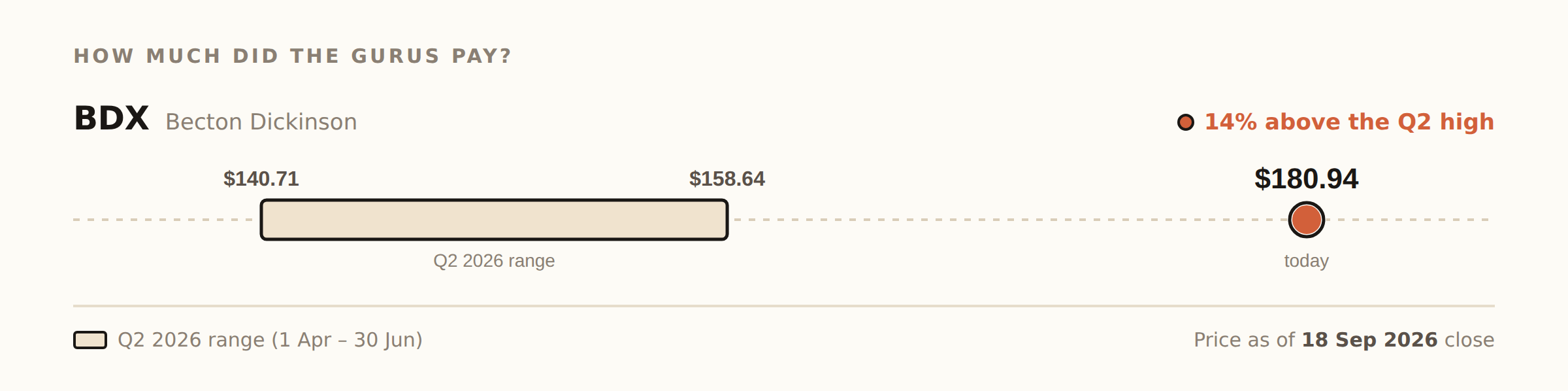
How much did the Gurus pay?
Greenhaven built its entire $860 million position inside the second quarter, and Werres has been holding since July 2025.
📌 BDX goes on the watchlist
I already own Baxter, added in September 2025 after my Pzena deep-dive, and that is another medtech turnaround where the thesis hasn't fully played out yet. I'd rather not hold two positions in the same corner of the same sector before I've seen how the first one resolves.
That’s it for this week’s edition. As always, thank you for following along my learning journey!
You can follow me on Substack @gurugems and X @guru_gems for more insights.
Until next week!
P.S. Shoutout to Data Driven Research who is building out ownershiptrace.com - Check it out!