
Welcome to Round 10 of building my Magic Formula Portfolio
This one is a bit special: this week marks exactly one year since I bought the first 3 stocks on 7 July 2025.
Quick reminder if you are new to Guru Gems: while studying investing masters, I am creating two real-money portfolios to put my learnings into practice.
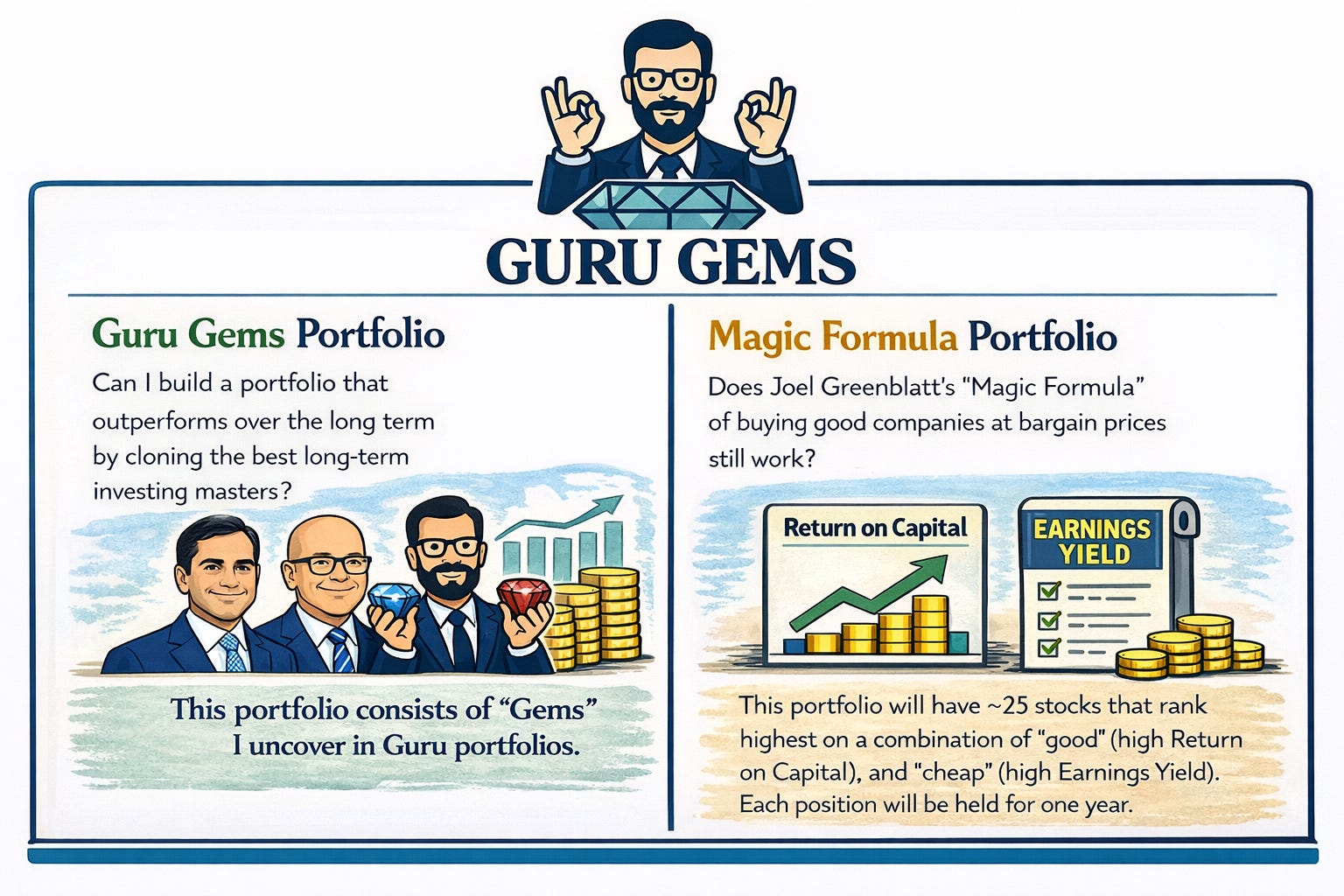
If you are new to Guru Gems, start here
Magic Formula Refresh
In ‘The Little Book that (Still) Beats the Market’, Joel Greenblatt suggests that a regular investor can beat the market averages by buying a group of ‘good’ companies at ‘bargain’ prices.
‘Good’ → High return on capital
‘Bargain’ → High earnings yield
Since he expects the magic formula to work on average, Greenblatt suggests to own a basket of 20-30 stocks, to buy this basket over the course of a year, and to hold each stock for exactly one year.
You can read more on Joel Greenblatt and his Magic Formula here.
You can also download my Joel Greenblatt e-book for free:

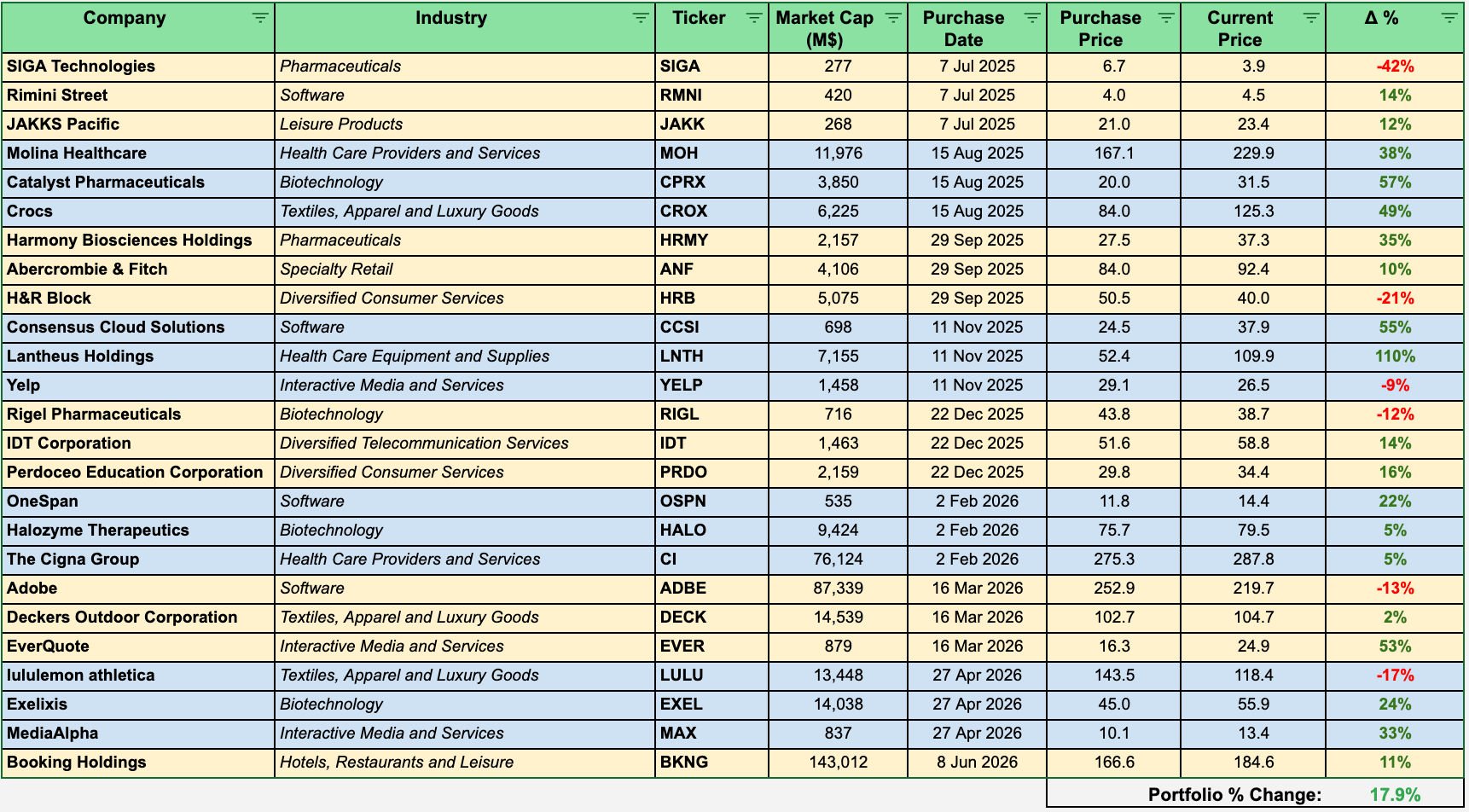
One Year In: Current Magic Portfolio Performance
Last month I added Booking Holdings (BKNG) in Round 9, bringing the portfolio to its full size of 25 stocks.
The overall performance of the Magic Portfolio after year one: +18%.
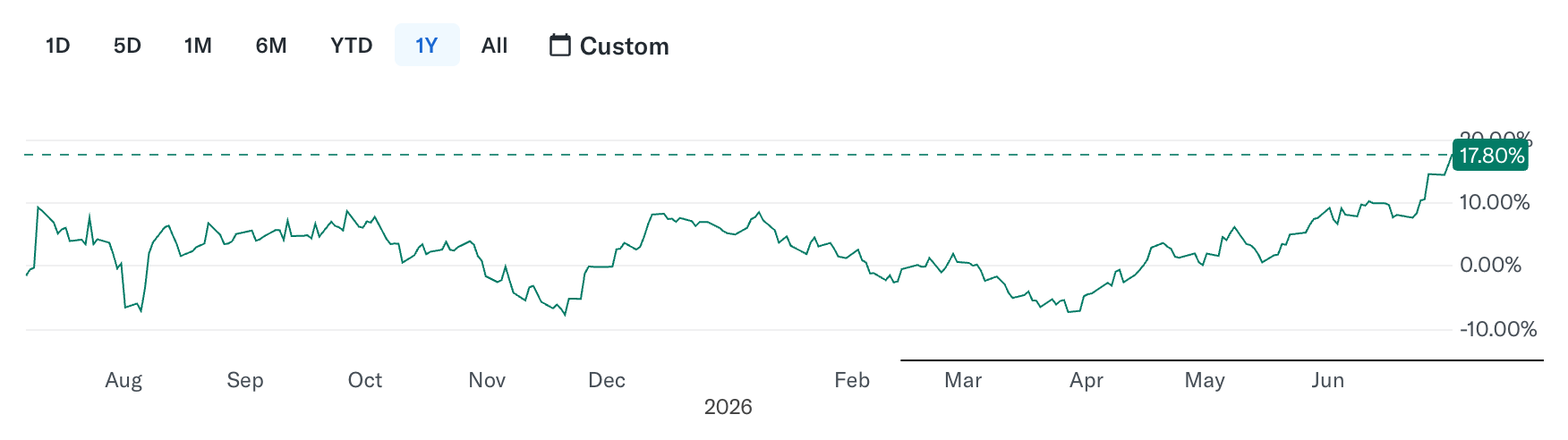
On a YTD basis, the Magic Formula Portfolio (+14%) is beating both the S&P 500 (+9%) and the NASDAQ Composite (+11%):
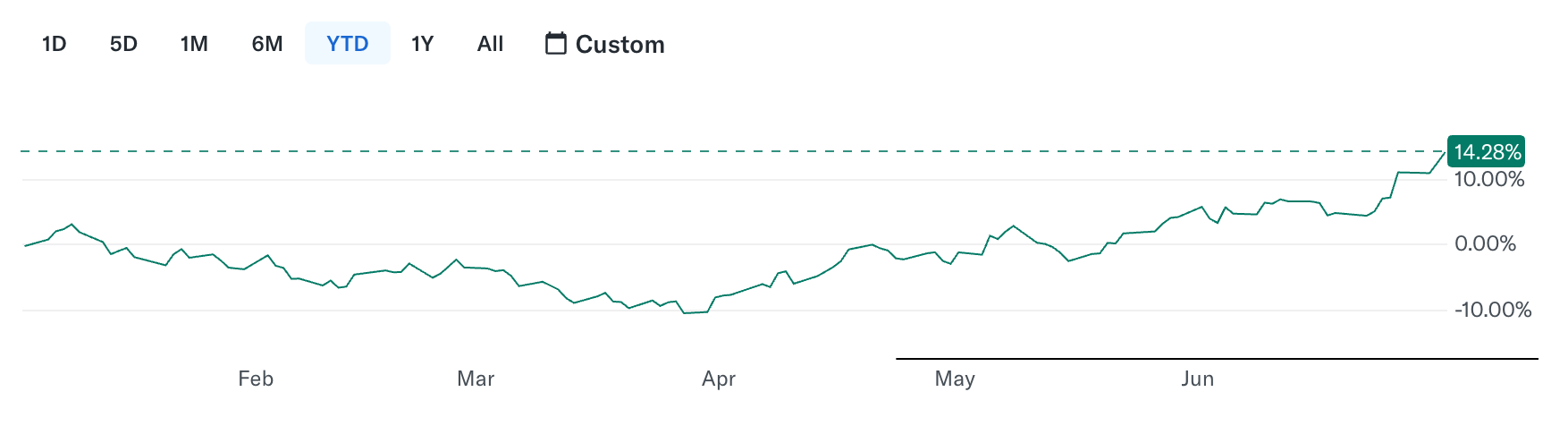
Some observations after 12 months:
The big winners were not the obvious ones. Lantheus (LNTH, +110%), Catalyst Pharmaceuticals (CPRX, +57%), Consensus Cloud Solutions (CCSI, +55%) and EverQuote (EVER, +53%) lead the pack. None of these were names I would have picked on conviction so I’m glad the formula picked them.
19 of 25 positions are in the green. The formula does not need every stock to work. SIGA (-42%), H&R Block (-21%) and lululemon (-18%) are the biggest detractors. This is exactly what Greenblatt warns about: some cheap stocks are cheap for a reason, but that’s why you hold a basket of 25 names, allowing the formula to work on average.
“If you are able to stick with the magic formula strategy through good periods and bad, you will handily beat the market averages over time” — Joel Greenblatt
If you enjoy Guru Gems, please help others discover it by clicking 🤍
Selling My First 3 Stocks
Greenblatt’s rule is to hold each stock for exactly one year, then sell. No exceptions and no second-guessing.
So this week, I am selling the 3 names I bought on 7 July 2025:
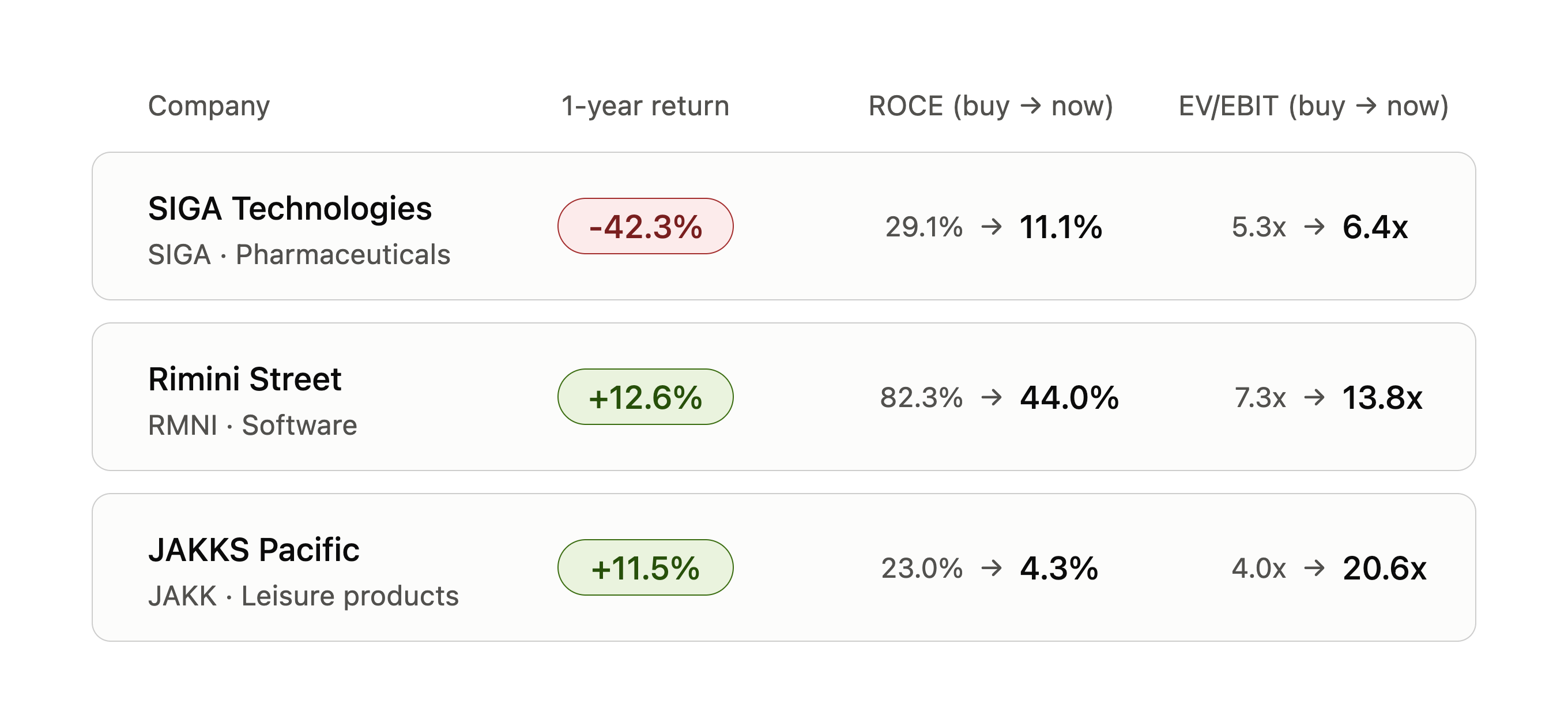
The first cohort ends with a losing average of roughly -6%: two modest winners and one heavy loser.
SIGA was my best performer in the early months after jumping nearly 40% on strong earnings, but it ends the year as my worst position. I held through the entire round trip, which was painful to watch, but part of the process.
What is interesting is that both metrics (ROCE and EV/EBIT) deteriorated, across all three names. None of the three would qualify for the formula today and this illustrates that the annual refresh is how the portfolio stays good and cheap, instead of drifting into “was good, no longer cheap”.
New Magic Formula Stocks
As I explain in detail in my first Magic Portfolio post, I use Joel Greenblatt’s Magic Formula screener combined with financial ratios data to identify the top stocks in terms of combined rank for Return on Capital (using ROCE) and Earnings Yield (using EV/EBIT).
This round, I extended the analysis with three additional criteria: P/FCF (an alternative valuation lens to EV/EBIT), Revenue 3yr CAGR (is the company still growing?) and Net Debt/EBITDA (how much debt is on the balance sheet?).
Two notes on this round’s selection:
I limited precious-metals miners to one. The raw screen currently ranks three gold/tin miners near the top (Alphamin, Andean Precious Metals, Wesdome). I guess this is a reflection of where we are in the metals cycle. Following the ranking blindly would have made this a mining round. I capped it at one miner and chose the highest-quality of the three: Wesdome.
I skipped HP Inc (HPQ) despite its high rank. HPQ ranked above two of my picks on the raw screen. But it has appeared on the Magic Formula screener for a very long time while its share price has declined over the past 5 years. You could argue that this is the classic profile of a value trap, and therefore I decided to pass.
Wesdome Gold Mines (WDO, Market cap $2.7B)
Magic Formula metrics: ROCE 63% (3yr: 42%); EV/EBIT 5.6x; Net cash
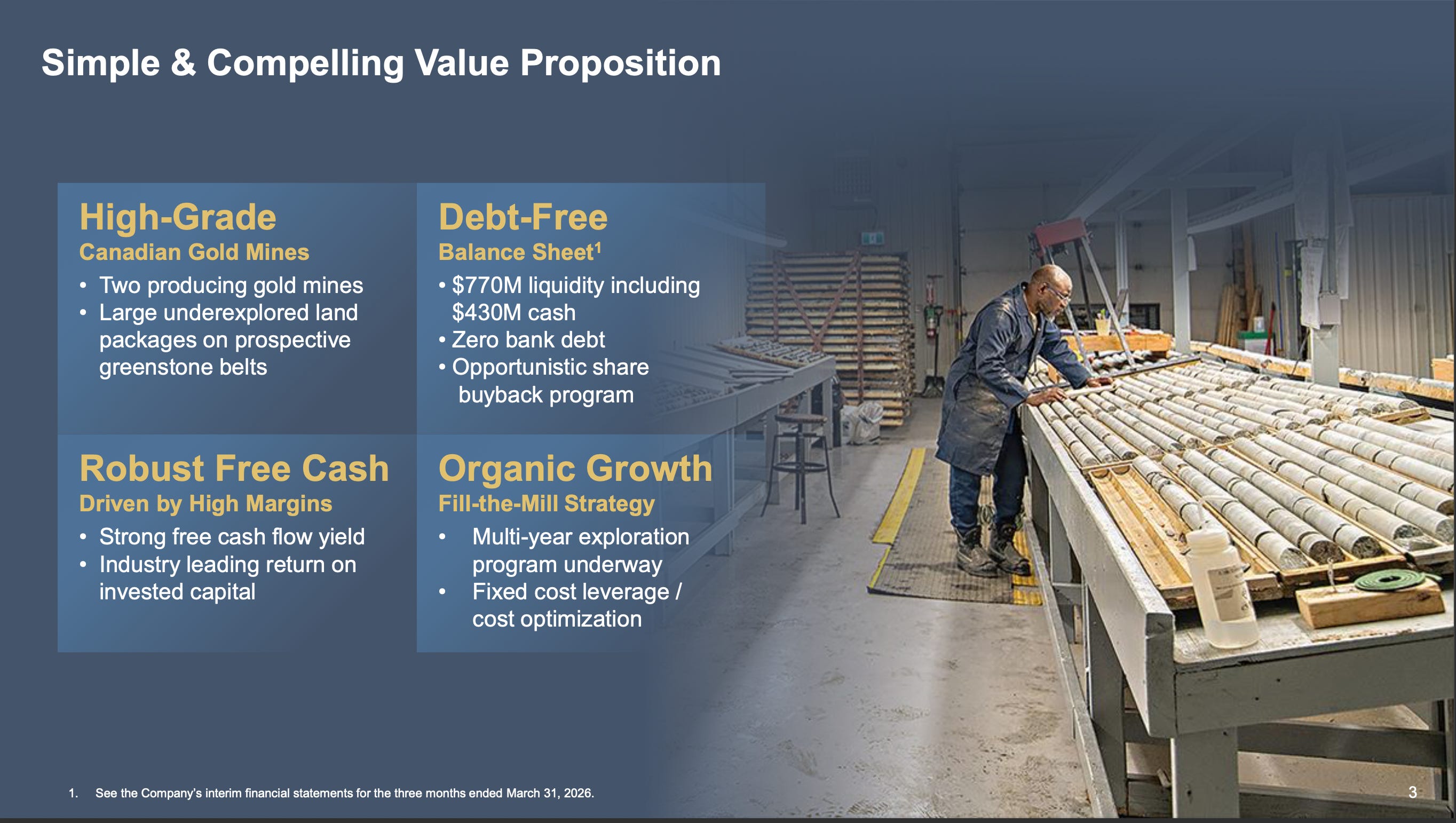
Wesdome Gold Mines is a Canadian gold producer with two high-grade underground mines: Eagle River in Ontario and Kiena in Québec.
What sets Wesdome apart from most miners is the balance sheet: completely debt-free, with the company buying back stock while funding growth internally. Revenue grew +55% over the past 3 years on the gold-price tailwind.
The Buckle (BKE, Market cap $2.1B)
Magic Formula metrics: ROCE 35% (3yr: 34%); EV/EBIT 8.1x; Net Debt/EBITDA 0.4x
A specialty apparel retailer from Kearney, Nebraska, known as a denim destination, operating ~440 stores across 42 states, including its own exclusive BKE brand.
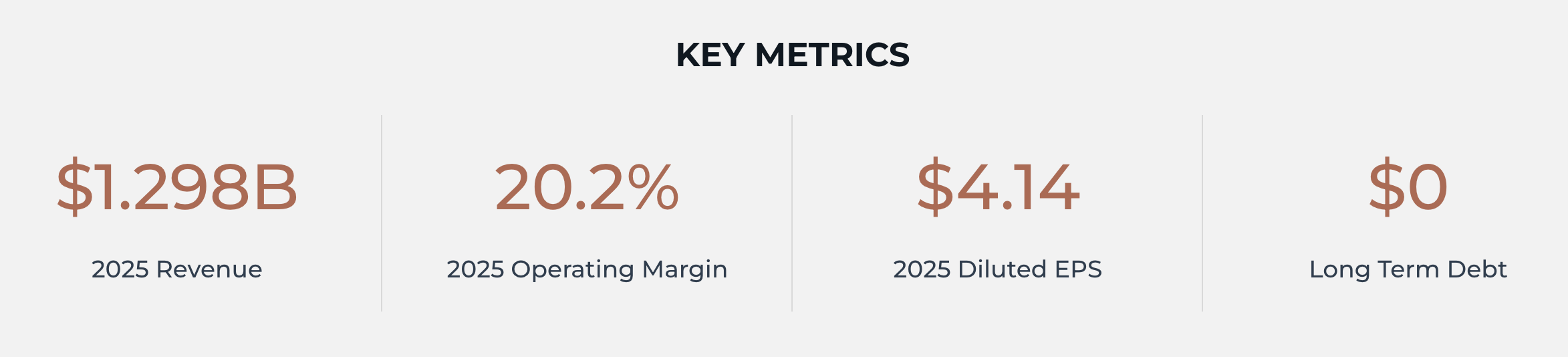
This is the cleanest “boring quality” name on the screen: high returns on capital year after year, near-zero debt, and a consistent dividend.
Revenue has been relatively flat over 3 years though recent comparable-store sales are accelerating (+5.7% in Q1).
Cognizant Technology Solutions (CTSH, Market cap $20B)
Magic Formula metrics: ROCE 20% (3yr: 20%); EV/EBIT 5.6x; Net cash
Cognizant is one of the world’s largest IT services firms, operating across financial services, health sciences, products & resources, and communications/media/tech.
Cognizant is cheap for the same reason many other service forms have been hit: the market fears AI will commoditize what IT-services firms sell.
At a price below 10x earnings, with a net-cash balance sheet, revenue still growing, an expanding operating margin and $1.6B per year returned to shareholders via buybacks and dividends, the magic formula is suggesting that a lot of pessimism is already in the price.
What’s interesting is that Rich Pzena holds Cognizant as one of his largest individual holdings and further added to the position in Q1 2026. Here is an extract from Pzena’s US Focused Value Q1 Commentary:
Leading IT services provider Cognizant (CTSH) was weak, despite reporting robust 4Q earnings with peer-leading organic growth, due to fears around AI disruption to the services industry more broadly. We continue to see these fears as overblown and added to our position on weakness.
Pzena also still owns Baxter as one of his top 5 positions, a stock I added in September 2025 and which is up 11% since then.

This brings the portfolio to 25 stocks again, and ready for year two. From here on, every round will be both a sell and a buy: the Magic Formula flywheel is now turning.
That’s it for this week! Please like or share if you enjoy reading Guru Gems.
You can follow me on X @guru_gems and Substack @gurugems for more insights.
Until next week!